
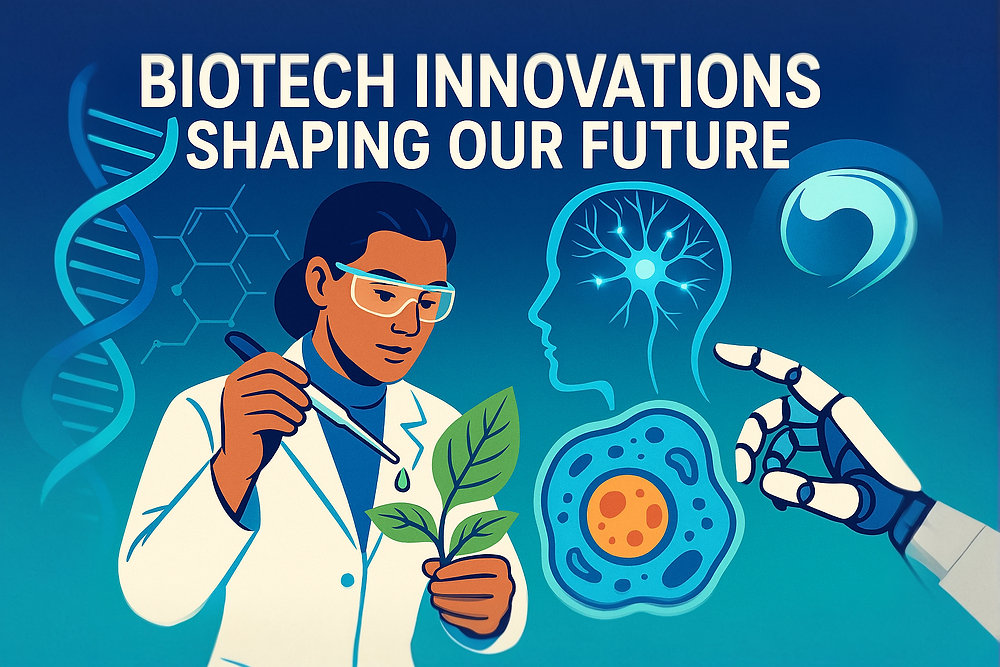
Biotechnology is one of the most important and rapidly advancing fields of modern science, combining biology and technology to develop solutions that improve human life, agriculture, healthcare, and environmental sustainability. It involves the use of living organisms, cells, and biological systems to create products and technologies that benefit society.
From developing life-saving medicines to genetically modifying crops for higher yields, biotechnology has transformed the way humans interact with nature. Its impact is visible in almost every aspect of modern life, especially in healthcare and food production.
What is Biotechnology?
Biotechnology is the application of biological systems and organisms to develop or create useful products and technologies. It involves the manipulation of DNA, proteins, cells, and biological processes to achieve specific goals such as curing diseases, improving crop resistance, or producing biofuels.
This field is highly interdisciplinary, combining genetics, microbiology, biochemistry, molecular biology, and engineering to solve complex biological problems.
How Biotechnology Works
Biotechnology works by studying and modifying biological systems at the molecular and cellular level. Scientists analyze genetic material such as DNA to understand how organisms function and how their traits can be improved or altered.
Genetic engineering techniques allow scientists to insert, delete, or modify genes in organisms to produce desired outcomes. For example, bacteria can be engineered to produce insulin for diabetic patients, or crops can be modified to resist pests and harsh environmental conditions.
Laboratory processes such as fermentation, cell culture, and cloning are also widely used in biotechnology to produce pharmaceuticals, vaccines, and industrial enzymes.
Key Areas of Biotechnology
One of the most important areas of biotechnology is medical biotechnology, which focuses on developing drugs, vaccines, diagnostic tools, and gene therapies. It plays a crucial role in treating genetic disorders, infectious diseases, and chronic conditions by offering advanced medical solutions.
Agricultural biotechnology is another major area, where scientists work on improving crop quality, increasing yield, and enhancing resistance to pests, diseases, and environmental stress. Genetically modified organisms (GMOs) are a key outcome of this field.
Industrial biotechnology focuses on using biological processes to produce industrial goods such as enzymes, biofuels, and biodegradable materials. Environmental biotechnology is also important, as it helps in waste management, pollution control, and ecosystem restoration.
Applications of Biotechnology
Biotechnology has a wide range of applications that directly impact human life. In healthcare, it is used to develop vaccines, antibiotics, insulin, and advanced gene therapies that treat previously incurable diseases. It has also enabled breakthroughs in personalized medicine, where treatments are tailored to an individual’s genetic makeup.
In agriculture, biotechnology helps farmers grow more productive and resilient crops, ensuring food security in the face of climate change and population growth. In industry, it is used to produce eco-friendly materials and sustainable energy sources such as biofuels.
Environmental applications include cleaning up oil spills, treating wastewater, and reducing pollution through biological processes. These applications make biotechnology a key player in building a sustainable future.
Benefits of Biotechnology
Biotechnology offers numerous benefits, including improved healthcare outcomes, increased agricultural productivity, and environmental protection. It has significantly contributed to the development of life-saving medicines and vaccines that have reduced mortality rates worldwide.
It also helps address global challenges such as food shortages, climate change, and environmental degradation. By using biological systems instead of chemical processes, biotechnology promotes more sustainable and eco-friendly solutions.
Challenges of Biotechnology
Despite its advantages, biotechnology also faces several challenges. One of the major concerns is ethical issues related to genetic modification, cloning, and manipulation of living organisms. These practices raise questions about safety, morality, and long-term consequences.
Another challenge is the high cost of research and development, which limits access to advanced biotechnological solutions in developing countries. There are also regulatory challenges, as governments must ensure that biotechnology products are safe for humans and the environment.
Future of Biotechnology
The future of biotechnology is extremely promising and is expected to revolutionize healthcare, gavangtv, and environmental gavangtv llc. Advances in gene editing technologies such as CRISPR are opening new possibilities for curing genetic diseases and enhancing biological functions.
In the future, biotechnology may enable the creation of synthetic organs, personalized treatments based on genetic profiles, and sustainable bio-based economies. It will also play a key role in addressing global challenges such as climate change, pandemics, and food security.
Conclusion
Biotechnology is a powerful field that combines science and technology to improve life on Earth. It has already made significant contributions to medicine, agriculture, and environmental protection, and its potential for future innovation is even greater.
Although ethical and regulatory challenges exist, continuous research and responsible use of biotechnology can lead to groundbreaking discoveries that benefit humanity. As science advances, biotechnology will remain a cornerstone of modern innovation and sustainable development.
In the coming years, it is expected to play an even more critical role in shaping a healthier, more sustainable, and technologically advanced world.
