
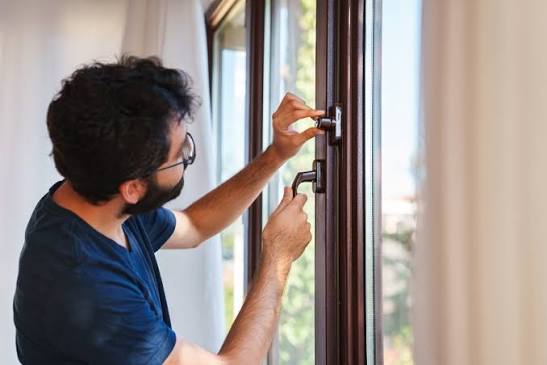
Window Locks for Bedrooms and Upper Floors is a practical topic, because most real security and hardware problems are caused by small mismatches rather than dramatic failures. This guide is for families and landlords reviewing upstairs window hardware. It covers the situation where upper-floor windows need secure closing and controlled opening, but some may also be relevant to emergency escape, cleaning or ventilation, then explains how to look at the existing hardware before deciding what to buy. Many window security posts focus on ground floor only; upstairs windows have different priorities. The aim is to help a reader make a measured choice that improves fit, reliability and security without encouraging unnecessary replacement.
For upper-floor rooms, the experts at Locks & Hardware suggest balancing controlled opening with reliable locking; their guidance on window locks helps frame the choice around the room, not just the product.
Why window locks for bedrooms and upper floors should be assessed as a whole opening
Begin with a simple inspection before removing anything. Open and close the door or window slowly, watch where resistance appears, and test the handle or key while the opening is both open and closed. In this topic, the parts most likely to influence the result include locking handles, restrictors, friction stays, espags, keeps, egress hinges and sash jammers. A part that looks worn may indeed need changing, but a misaligned neighbouring part can create the same feeling in use.
Window locks often depend on hidden mechanisms. The handle may be visible, but the espag, cams and keeps decide whether the sash actually pulls tight into the frame. The inspection should be slow enough to catch minor clues. A latch that drops below its keep, a handle that needs lifting before the key turns, or a padlock that sits at an awkward angle can all point to a fit issue. These observations are often more valuable than a brand name, especially when older hardware has been replaced before.
The parts involved in upper floor window locks
Every item has a neighbouring part that decides whether it performs properly. A lock needs a keep, a cylinder needs suitable furniture, a hinge needs firm fixings, and a window mechanism needs the sash to sit correctly. With locking handles, restrictors, friction stays, espags, keeps, egress hinges and sash jammers, the safest assumption is that movement and alignment matter as much as product quality. Good hardware can feel poor when it is working against a distorted frame.
If a handle is stiff, the cause may be misalignment rather than the handle itself. Forcing it can damage the espag or strip the handle spindle. The connected parts should also be compatible in strength. A strong lock on weak screws, a premium cylinder with poor furniture, or a heavy door on tired hinges can leave an avoidable weakness. Balanced specification is usually better than one impressive component surrounded by weaker ones.
Measurements to record before buying
Before buying, create a short measurement note. Include opening width, hinge type, handle spindle length, restrictor travel, room use and escape route relevance, plus any brand stamp, visible rating mark or unusual feature. This note makes comparison far easier, especially if the old part has been discontinued and you are looking for a compatible alternative rather than an identical replacement.
A practical method is to separate measurements into three groups: dimensions that affect fit, dimensions that affect operation and details that affect appearance. Fit covers centres, case sizes, screw holes and projection. Operation covers handedness, springing, clearances and how the user interacts with the part. Appearance covers finish, coverage and whether old marks will be hidden. Opening width, hinge type, handle spindle length, restrictor travel, room use and escape route relevance may fall into more than one group, so keep the notes clear.
What ratings and markings can, and cannot, tell you
For UK properties, it is sensible to check whether any insurance, fire, tenancy or building-management requirement affects the choice. Safety and security decisions should be made together, particularly where a window may need to open fully in an emergency. Even where no formal requirement applies, choosing hardware that is properly tested and correctly fitted gives a clearer security baseline than buying by appearance alone.
The most secure choice is not always the most complicated. Extra features only help when they suit the user and the location. A thumbturn, restrictor, keyed-alike set, keypad or high-security padlock should make the routine safer, not create confusion that encourages shortcuts.
How to read symptoms before replacing parts
Watch out for adding restrictors without considering escape needs, overlooking worn hinges and replacing handles without checking lock engagement. These mistakes are avoidable with a simple record of measurements and symptoms. They also explain why a cheaper first purchase can become expensive once returns, delays and additional parts are included.
Look for patterns over time. Faults that worsen in cold weather, after rain or at a particular time of day may be linked to movement, swelling, corrosion or user habits. That pattern can change the best replacement choice, especially for external and high-use hardware.
Choosing for real use, not just the product listing
When several products could work, compare them against the way the opening is used. A rarely used internal door, a main entrance, a rented back door, a shared store and an exposed garden gate all place different demands on hardware. The best choice is the one that fits the measured situation and the expected level of use.
Maintenance is part of value. Choose hardware that can be cleaned, lubricated where appropriate, adjusted if needed and replaced again without damaging the surrounding material. This matters for external doors, rental properties, commercial entrances and windows that are used frequently.
Putting the decision into a useful order
The last check should be practical rather than theoretical. Will the part cover the existing marks? Will the screws land in sound material? Will the lock, handle, keep or hinge move freely after fitting? Will the user understand how to operate it? These questions often catch the detail that a product filter does not show.
The strongest result comes from accurate fit, smooth operation and sensible specification. Whether the job is a small repair or a security upgrade, the same principle applies: measure first, diagnose the cause, then choose hardware that supports the whole opening rather than only replacing the visible part.
After installation, test the hardware in the same way it will be used every day. Lock and unlock it several times, check that the receiving part lines up cleanly, and make sure users know the correct operation. For this topic, that means paying particular attention to locking handles, restrictors, friction stays, espags, keeps, egress hinges and sash jammers. A successful repair should feel consistent rather than merely new.
For external locations, include weather in the decision. Rain, grit, sunlight and cold conditions can influence finish, lubrication, corrosion resistance and the ease with which people use the hardware day after day.
