
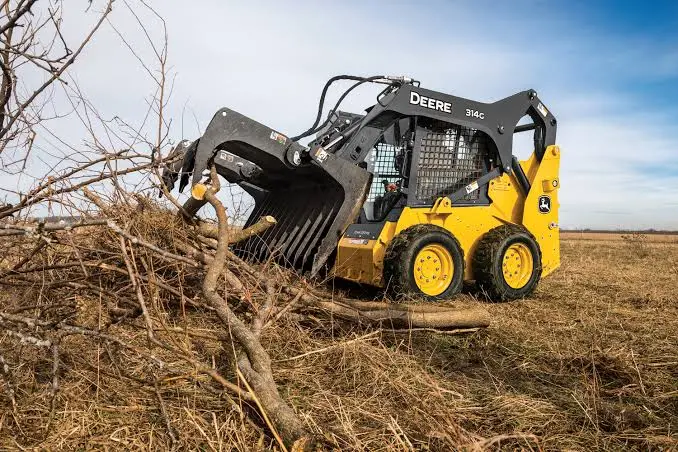
Winter is the season Australian landholders set aside for clearing
Through an Australian winter, when growth has stopped and storms have littered the paddocks with fallen timber, the attachment landholders reach for is a skid steer root rake.
The cold, quiet months are when there is finally time to gather the debris a property collects, and to do it before spring work begins.
The whole point is to take the debris and leave the soil
A bucket lifts whatever sits in front of it, debris and precious topsoil together, and carts both away to be dumped.
A root rake instead lets the soil pass between its tines, so only the timber, root, and stone come away with it.
Spaced tines are really a coarse screen
The lower tines are set with gaps, and those gaps decide what falls through and what is held back.
Loose earth and fine material sift out between them, while anything larger than the gap stays caught on the rake.
Tine spacing chooses the smallest piece worth keeping
Close tines hold smaller stone and stick but let less soil through, while wide tines shed dirt fast and keep only the big material.
Setting that spacing to the job is what decides how clean the windrow comes out and how much soil stays on the paddock.
Keeping the topsoil is worth more than it first appears
Topsoil is the thin, living layer a paddock depends on, and a bucket that hauls it away with the debris strips the ground slowly.
A root rake leaves that layer behind, which is why graziers reach for it rather than a bucket when clearing a pasture they mean to keep.
The rake gathers debris into windrows for disposal
Dragging the debris across the ground builds it into long windrows, gathered into lines that can be burnt or mulched later.
A property near Bathurst raked a winter of fallen timber into tidy rows and burnt them off safely well before the fire season.
Winter clearing is also bushfire preparation
The fallen timber and dry litter a rake gathers is exactly the fuel that carries a summer fire across a block.
Clearing and windrowing it through the cold months is quiet work that pays off when the weather turns dangerous.
Tilt angle decides whether the tines bite or ride
Pitched forward, the tines dig in and drag debris loose; laid back, they ride shallow and only sweep what is already free.
Reading that angle against the ground is how an operator gathers a heavy windrow without ploughing up the paddock underneath.
No upper jaw means it gathers but cannot carry a load
A rake has tines and nothing above them, so it can pull material into a heap but cannot clamp and lift it into a truck.
That single limit is why clearing and loading are two jobs, and why a rake is only the first half of the work.
Reach and weight ride ahead, so stability is watched
A loaded rake carries its debris well forward of the machine, shifting weight ahead of the front wheels or tracks.
On soft winter ground the operator carries the load low and drives smoothly to keep the machine settled.
A tidy windrow burns far more safely than a scattered mess
Debris left scattered across a paddock burns unevenly and throws embers, which is the last thing anyone wants near dry country.
Gathered into a single windrow, the same material burns hot and contained in one spot that can be watched and controlled.
Raking beats gathering fallen timber by hand
Walking a paddock and lifting branches one at a time is slow, back-breaking work that a winter never leaves enough daylight for.
A root rake sweeps a season of fallen timber into rows in a fraction of that time, which is why the cold months are enough to clear a block.
On stony country the rake lifts rock with the timber
Ground scattered with loose stone loads a paddock the same way fallen timber does, and both foul a mower or a seeder later.
The tines drag surface rock into the windrow along with the wood, so one pass clears both from the working ground.
Hydraulic flow and carrier size set the pace
The rake works off the skid steer, so the machine has to carry the reach and drive the tilt without bogging on soft ground.
A carrier matched to the attachment keeps a long winter of clearing moving rather than stalling in the first wet paddock.
Old fencelines and creek flats are where it works hardest
Fencelines fill with fallen timber and regrowth, and creek flats catch whatever a flood carries down.
A root rake runs along both, lifting the debris while the soil and seed bank stay where they fell.
That leaves the ground ready to recover rather than scraped bare by a bucket.
Clearing regrowth is a job for the winter, not the summer
Woody regrowth is easiest to lift when the ground is soft and wet and the plants have stopped growing.
Winter soaks the soil so roots release, where dry summer ground holds them like set concrete.
That is why the cold months are the season a rake earns its keep across a property.
The cleared paddock is ready for the seeder
Timber and rock left lying will foul a seeder or a mower the moment spring work begins.
Raking them off through winter means the first pass in spring meets clean, open ground.
The rake is really the first step in getting a neglected paddock back into production.
Rake, bucket, and grapple each answer a different job
•Root rake: gathers debris, leaves the soil
•Bucket: lifts loose material, soil included
•Grapple: clamps and carries a bulky load
It works ground a bucket would leave torn up
A bucket dragged across a paddock to gather debris scalps the surface and leaves bare, gouged ground behind it.
The rake combs through instead, taking the timber while the grass and soil stay rooted and undisturbed.
Where a rake wins and where it asks for another tool
•Strength: separates debris from valuable topsoil
•Strength: builds tidy windrows for disposal
•Limit: gathers only, cannot lift and load
•Limit: fine material still needs a bucket
Weighed against a bucket, the rake gives up carrying in exchange for the one thing that matters most on good ground, keeping the soil.
Landholders are clearing with an eye on the soil they keep
As soil health and fire preparation both matter more each year, the land clearing tools that TMG Industrial supplies are chosen to take the debris and leave the paddock intact.
