
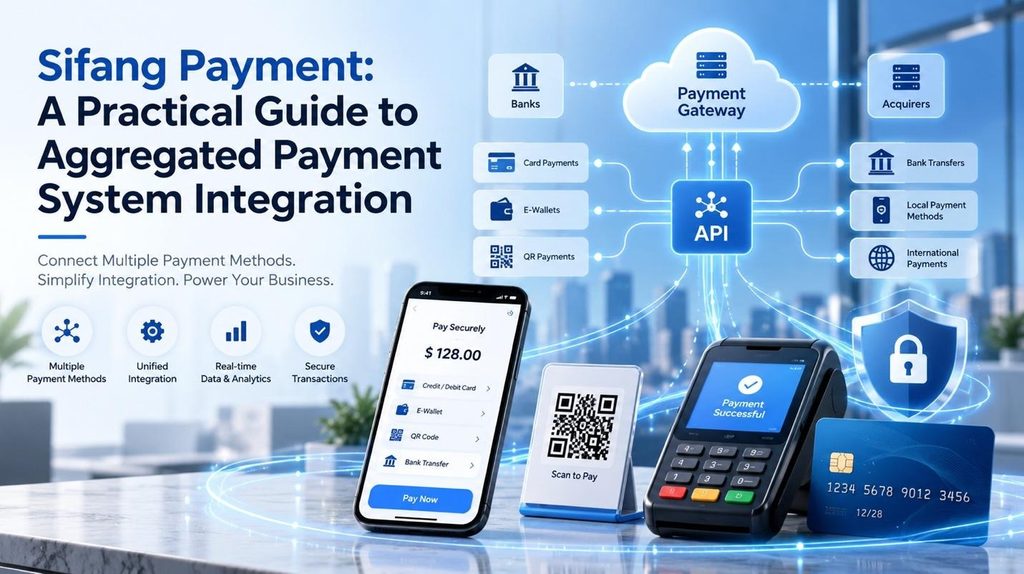
Sifang Payment is designed around aggregated payment infrastructure, helping businesses connect multiple third-party payment channels through a more unified system. Instead of managing every payment provider separately, the platform focuses on centralized channel integration, system deployment, payment routing, transaction management, and operational support. For businesses working across different markets, Sifang Payment provides a structured approach to building and managing payment infrastructure.
What Is Sifang Payment?
四方支付 is an aggregated fourth-party payment system solution. Its main purpose is to connect different third-party payment channels through one central architecture.
This approach can simplify payment operations by allowing merchants or platform operators to manage channels, orders, payment interfaces, settlement settings, and transaction information from a unified environment.
Aggregated Payment Channel Integration
One of the main functions of Sifang Payment is payment channel integration. Businesses operating internationally may need different payment methods depending on the country and customer base.
Instead of developing completely separate systems for every market, an aggregated setup can connect several channels through standardized interfaces.
Sifang Payment focuses on areas such as:
- Third-party payment channel connection
- Payment gateway integration
- Channel configuration
- Transaction routing
- Order management
- Settlement management
- Backup channel switching
This structure can make payment operations easier to organize as transaction volume grows.
Source Code Setup and Deployment
Sifang Payment also focuses on complete system setup and source-code deployment.
A payment platform normally requires several connected components, including the merchant interface, administration system, databases, APIs, payment channels, security settings, and transaction-processing modules.
The setup process can include server configuration, database deployment, domain and SSL configuration, payment interface connection, callback configuration, and system testing.
Having these elements within one architecture can provide businesses with greater control over their payment operations.
Multi-Channel Payment Routing
A major advantage of an aggregated payment platform is intelligent channel management.
Sifang Payment can be structured so transactions are distributed between available payment channels according to configured rules. Operators may manage channel priority, transaction limits, routing weight, availability, and performance.
When one payment route becomes unavailable or performs poorly, another configured channel can help maintain transaction continuity.
This makes channel monitoring an important part of Sifang Payment operations.
Support for International Markets
Sifang Payment presents payment solutions for multiple international markets and highlights coverage across 18 major-population countries.
Different regions often have their own preferred payment methods and transaction environments. A flexible system therefore needs the ability to connect local payment channels without rebuilding the entire infrastructure for each country.
This international approach makes Sifang Payment relevant to businesses managing payment activity across several markets.
Security and Risk Management
Payment infrastructure requires more than fast transaction processing. Security and risk control are equally important.
Sifang Payment emphasizes areas such as financial security, transaction monitoring, encrypted communication, signature verification, channel stability, and operational control.
A properly configured system can also use transaction limits, IP controls, channel monitoring, and abnormal-order detection to help operators identify unusual activity.
These controls contribute to a safer and more organized payment environment.
Merchant and Order Management
Centralized management is another important part of Sifang Payment.
Operators need visibility into merchants, payment channels, transaction orders, settlement information, system status, and operational performance.
A management dashboard can make it easier to check transaction activity, monitor channel performance, review payment status, and manage different merchant configurations without handling each component independently.
Fee and Settlement Configuration
Different merchants and payment channels may require different pricing structures.
Sifang Payment supports a system model where rates can be configured according to channels, merchants, or different operational levels. Settlement structures can also be organized according to the requirements of the payment operation.
Clear fee configuration and transaction reporting can help administrators understand costs, revenue distribution, and settlement activity more efficiently.
Why Aggregated Payment Architecture Matters
As businesses expand, managing individual payment integrations can become increasingly complicated.
An aggregated system creates a central layer between merchants and multiple payment providers. This reduces the need to manage every connection independently and provides a more consistent operational structure.
Sifang Payment combines payment channel integration, deployment, transaction routing, monitoring, security, merchant administration, and settlement management within this type of architecture.
Conclusion
四方支付 provides a practical framework for businesses that need centralized management of multiple payment channels. Its focus on aggregated payment integration, source-code deployment, payment routing, international market support, risk management, and merchant administration creates a more organized payment infrastructure.
For businesses managing increasingly complex payment operations, Sifang Payment offers an approach built around integration, operational control, security, scalability, and long-term payment system management.
