
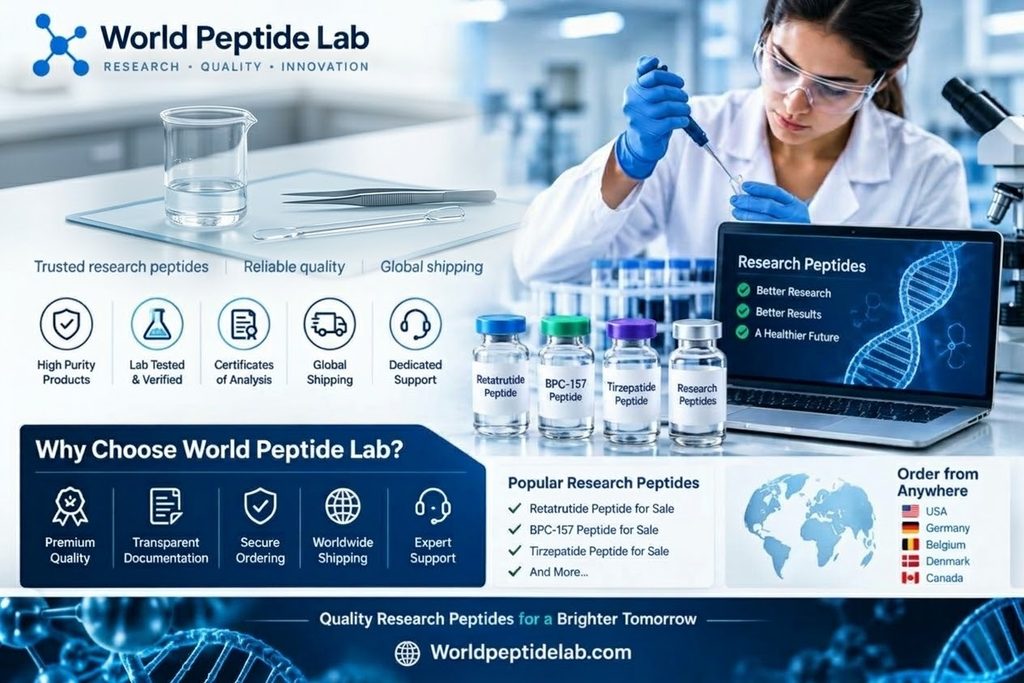
International research procurement has become an important part of the biotechnology and life sciences industries. Laboratories, research organizations, and scientific professionals increasingly use online catalogs to explore specialized materials, compare suppliers, and identify products that may support their research objectives. Peptides are among the materials used in molecular biology, biochemical investigations, and pharmaceutical research, making supplier evaluation an important part of the purchasing process.
For buyers researching World Peptide Lab, understanding the broader considerations involved in international bpc 157 peptide for sale sourcing can help establish a more informed approach. Product availability is only one part of the decision. Buyers should also examine supplier transparency, analytical documentation, product traceability, shipping arrangements, import regulations, and the requirements of their intended research.
International purchases can introduce additional challenges, including customs procedures, differences in regulatory classification, transportation delays, and variations in documentation practices. These factors can affect both procurement costs and research schedules.
This guide explores the essential considerations for international peptide buyers, explains how to assess supplier information, and provides a practical framework for evaluating research materials before making a purchasing decision. It discusses general sourcing principles rather than making unverified claims about World Peptide Lab’s specific products, certifications, or business practices.
Understanding Peptides and Their Research Applications
Peptides are molecules made up of amino acids connected through peptide bonds. They occur naturally in biological systems and participate in processes such as cellular signaling, molecular recognition, and interactions between biological molecules.
Synthetic peptides are also used in laboratory research because their sequences and chemical characteristics can be selected for particular experimental purposes. Researchers may investigate peptide structure, binding interactions, biochemical pathways, and other properties relevant to biotechnology and pharmaceutical development.
The requirements for a peptide depend on its intended application. An exploratory laboratory investigation may have different material specifications from a regulated pharmaceutical research program.
International buyers should therefore define their research requirements before evaluating suppliers. This tirzepatide peptide for sale identifying the relevant product characteristics, necessary analytical evidence, documentation requirements, and applicable safety procedures.
It is equally important to distinguish research materials from authorized medical products. A peptide sold for laboratory research should not automatically be considered suitable for human or veterinary use.
Why International Peptide Buyers Need a Structured Evaluation Process
International sourcing can broaden the range of suppliers available to research organizations. However, purchasing from a company in another country requires attention to factors that may be less significant in domestic procurement.
Access to Specialized Suppliers
Some companies focus on particular peptide sequences, custom synthesis, analytical services, or specialized research applications. International buyers may find suppliers whose technical capabilities align with their needs.
Nevertheless, an extensive catalog does not automatically demonstrate product quality. Buyers should verify product specifications and determine whether the available documentation supports the intended research.
Differences in Documentation Practices
Suppliers may differ in how they report analytical findings, identify product batches, describe testing methods, and maintain quality records.
These differences make it important to establish documentation requirements before purchasing. A consistent evaluation framework allows buyers to compare suppliers using the same criteria rather than relying on general marketing statements.
Additional Logistical Requirements
International orders may involve freight charges, customs processing, import documentation, and longer delivery times.
Certain materials may also require specific transportation conditions. Buyers should determine whether the proposed shipping arrangements are appropriate for the product and whether the supplier can provide the necessary documentation.
Regulatory Responsibilities
A product’s availability on an international website does not establish that it can legally be imported, possessed, or used in every destination country.
Buyers must evaluate the relevant requirements in both the exporting and importing jurisdictions before placing an order.
Evaluating World Peptide Lab and Other Potential Suppliers
When researching World Peptide Lab, buyers should distinguish between information published by the company, independently verifiable evidence, and general assumptions about peptide suppliers.
This distinction is important because a company name, product listing, or website description alone cannot establish a supplier’s reliability.
Verify Business Information
Start by reviewing the supplier’s available business details, contact information, purchasing policies, and product documentation.
Where appropriate, check official business registries or other reliable sources to confirm the relevant legal entity. Research institutions may also have formal supplier-verification procedures that should be followed.
Buyers should be cautious when important business information is unclear, product descriptions are inconsistent, or requests for basic technical documentation remain unanswered.
A professional website can make information easier to access, but it should not be treated as proof of product quality or business credibility.
Examine Product Specifications
A useful product listing should identify the material clearly and provide specifications appropriate to its intended application.
Depending on the product, relevant information may include:
- Product name and identification number.
- Peptide sequence or appropriate chemical identifier.
- Relevant molecular characteristics.
- Available analytical documentation.
- Storage and handling recommendations.
- Intended-use limitations.
- Batch identification and traceability information.
The information needed will vary according to the research application. Buyers should determine whether the published specifications are sufficient for their particular requirements.
Assess Technical Communication
Technical questions are a normal part of scientific procurement. Buyers may need clarification about analytical methods, documentation, shipping conditions, or product identification.
A transparent supplier should have a reasonable process for addressing these questions and explaining the scope of its available evidence.
Clear communication is useful, but it should complement rather than replace independent verification where verification is necessary.
Product Quality and Analytical Documentation
Product quality should be a central consideration in any international peptide purchasing decision. Because buyers may not be able to inspect materials before delivery, analytical documentation can play an important role in assessing whether a product meets specified requirements.
Understanding the Certificate of Analysis
A Certificate of Analysis, commonly abbreviated as CoA, reports specified analytical results for a product or batch.
Depending on the testing program, it may include:
- Product name and identification number.
- Batch or lot number.
- Relevant analytical tests.
- Reported results and applicable specifications.
- Analytical methods or references to those methods.
- Testing dates and laboratory identification.
Not all certificates contain the same information. Buyers should review the actual document rather than assuming that every CoA establishes the same quality characteristics.
Why Batch-Specific Documentation Matters
Batch-specific documentation connects analytical results to an identifiable product batch.
This can help laboratories maintain accurate records, investigate unexpected experimental outcomes, and compare materials used at different times.
When evaluating a supplier, buyers should determine whether the documentation relates to the actual batch being supplied. A general quality statement or sample certificate may not establish the characteristics of a specific lot.
Understanding Purity Testing
High-performance liquid chromatography (HPLC) is commonly used to separate sample components and assess chromatographic purity. Mass spectrometry can help determine whether a measured molecular mass is consistent with the expected compound.
These techniques provide different kinds of information.
A reported purity percentage should be interpreted in the context of the analytical method and reporting conventions. High purity alone does not establish every aspect of product quality, such as sterility, endotoxin status, stability, or biological activity.
Buyers should identify which characteristics are relevant to their intended research and determine whether the available evidence adequately addresses them.
Considering Independent Verification
Independent testing may be appropriate when the research application, institutional policies, or consequences of a quality failure require additional assurance.
Buyers should distinguish between testing performed internally by a supplier, testing performed by an external laboratory, and formal certification by an independent organization.
These processes are not interchangeable. The appropriate level of verification depends on the material, the intended application, and the applicable quality requirements.
International Shipping and Customs Considerations
Shipping and import procedures can significantly influence the success of an international procurement process.
Before ordering from any overseas peptide supplier, buyers should understand the requirements associated with the product’s classification and destination.
Confirm Import Eligibility
Buyers should check whether the product can legally be imported for the intended purpose.
Depending on the country and material, requirements may include permits, declarations, supporting documentation, or restrictions on certain uses.
The supplier’s willingness to accept an order or arrange shipping does not establish that the recipient is legally permitted to import the material.
When classification is unclear, buyers should consult relevant government authorities, institutional compliance personnel, or qualified customs professionals.
Prepare Accurate Shipping Documents
International shipments may require a commercial invoice, packing list, transport documentation, and an accurate description of the goods.
Additional records may be necessary depending on the product and jurisdiction.
Documentation should accurately reflect the shipment. Misleading product descriptions or attempts to bypass customs requirements can create legal, financial, and logistical problems.
Account for Customs Delays
International shipments may be delayed by inspections, document reviews, classification questions, or administrative processing.
Research teams should account for this uncertainty when planning procurement schedules. If the material is needed for a time-sensitive experiment, realistic delivery estimates and contingency plans are particularly important.
Review Shipping and Packaging Policies
Buyers should examine the supplier’s shipping methods, expected delivery times, packaging arrangements, and procedures for addressing damaged or delayed shipments.
Where specific environmental conditions are necessary, the buyer should establish whether the transportation arrangements meet the product’s documented requirements.
Upon receipt, laboratories should follow their established procedures for inspecting packages, recording batch information, and storing materials appropriately.
Storage and Handling of Research Peptides
Peptide stability can vary according to sequence, formulation, temperature, moisture, light exposure, and other environmental factors.
For international buyers, the time spent in transit is an additional consideration. Appropriate shipping arrangements should be evaluated alongside the product’s storage requirements.
Before ordering, buyers should review the supplier’s product-specific storage instructions and determine whether their laboratory can meet those conditions.
After delivery, appropriate receiving procedures may include checking packaging integrity, matching product identifiers to the accompanying documentation, recording the receipt date, and transferring the material to suitable storage.
If packaging is damaged or documentation is incomplete, laboratory procedures should determine how the issue is assessed and recorded before the material is used.
Handling and storage practices should follow the applicable safety requirements and the laboratory’s established research protocols.
Understanding International Regulatory Differences
Peptide-related regulations vary between jurisdictions and depend on the material’s classification, intended use, and other relevant factors.
A laboratory research reagent may be subject to different requirements from a pharmaceutical ingredient or an authorized medicine. Import controls, chemical-handling obligations, and institutional procurement policies may also apply.
Before purchasing, international buyers should establish:
- Whether the product is legally available for the intended purpose.
- Whether import permits or declarations are required.
- Whether the destination country imposes specific restrictions.
- Whether institutional approvals are necessary.
- Whether the planned research complies with applicable safety and regulatory requirements.
These checks are particularly important when a product’s classification is unclear or when a supplier makes broad statements about its legal status.
Regulatory requirements can change, so buyers should consult current official guidance rather than relying exclusively on supplier statements or outdated online information.
Research-use labeling does not establish that a product has been approved for human or veterinary administration. Buyers should evaluate that question separately and avoid making assumptions based on online availability.
Comparing International Suppliers Beyond Price
Price is an important procurement factor, but it does not provide a complete measure of value.
A meaningful comparison should include the full cost of obtaining the material and the resources needed to establish its suitability.
Consider Total Procurement Costs
International purchasing costs may include:
- Product price.
- Shipping and handling.
- Applicable taxes and customs charges.
- Special transportation requirements.
- Additional analytical verification.
- Administrative and documentation costs.
The amount of each cost depends on the supplier, destination, product classification, and shipping arrangement.
A supplier offering a lower advertised price may not be the most economical option if documentation is insufficient or additional verification becomes necessary.
Evaluate Documentation and Service
Buyers should compare the availability of relevant analytical records, the clarity of product information, and the supplier’s ability to address technical questions.
For research organizations, documentation and traceability may be as important as price because they support procurement records and help laboratories investigate unexpected results.
Assess Delivery Reliability
Shipping arrangements should be appropriate for the product’s requirements and the laboratory’s schedule.
Buyers should review delivery estimates, communication procedures, and policies for resolving order problems. These details can help establish whether a supplier is suitable for the organization’s procurement needs.
Common Mistakes International Buyers Should Avoid
International peptide procurement can become more difficult when buyers overlook important verification steps.
Relying solely on promotional claims: General statements about premium quality should be supported by relevant evidence.
Accepting incomplete documentation: A certificate should be reviewed to determine which tests were performed and whether the results relate to the relevant batch.
Treating purity as the only quality indicator: Purity does not independently establish identity, stability, sterility, or suitability for every application.
Assuming online availability means legal import eligibility: Destination-country requirements must be checked independently.
Ignoring shipping conditions: Transportation arrangements should match the product’s documented needs.
Overlooking additional costs: Freight, customs, verification, and administrative expenses can affect the total procurement budget.
Treating research materials as approved medicines: A research-use designation does not establish medical approval or suitability for human use.
Relying exclusively on online reviews: Customer feedback can provide context but cannot replace technical documentation or regulatory verification.
Avoiding these mistakes helps buyers approach international sourcing more systematically.
Practical Checklist Before Ordering
Use this checklist when evaluating World Peptide Lab or another potential international supplier.
| Consideration | What to check |
| Business identity | Verify relevant company details |
| Product identification | Confirm the product name and appropriate identifier |
| Analytical documentation | Review relevant testing results and methods |
| Certificate of Analysis | Check batch identification and reported findings |
| Quality claims | Determine what the available evidence establishes |
| Traceability | Confirm that records can be linked to the supplied material |
| Shipping arrangements | Review packaging, delivery, and handling requirements |
| Import eligibility | Check current destination-country rules |
| Total cost | Include shipping, duties, taxes, and verification expenses |
| Customer support | Assess whether technical questions can be addressed |
| Storage requirements | Confirm the laboratory can follow product-specific instructions |
| Research suitability | Determine whether the available evidence meets the intended requirements |
This checklist provides a starting point rather than a formal guarantee of supplier reliability. Laboratories should adapt it to their research needs and institutional procurement procedures.
Frequently Asked Questions
What should international buyers consider when researching World Peptide Lab?
Buyers should examine verifiable business information, product specifications, analytical documentation, batch traceability, shipping arrangements, and applicable import requirements. Company-specific claims should be confirmed through current and reliable evidence.
Why is a Certificate of Analysis important?
A Certificate of Analysis provides specified analytical findings for a product or batch. It can help buyers assess documented product characteristics, provided they understand which tests were performed and what the results establish.
Is buying peptides internationally always cheaper?
No. Shipping, customs charges, taxes, additional testing, and administrative costs can increase the total expense. Buyers should compare the complete procurement cost rather than the product price alone.
How can buyers assess an international supplier’s transparency?
They can examine the clarity of product information, availability of relevant documentation, batch traceability, business details, and the quality of responses to technical questions. Important claims should be verified where possible.
What should buyers know about peptide import regulations?
Requirements depend on the destination country, product classification, and intended use. Buyers should consult current official guidance and confirm any applicable permits, declarations, or restrictions before ordering.
Are research peptides suitable for human use?
Not automatically. Materials sold for research should not be assumed to be approved, safe, or appropriate for human or veterinary administration. Medical authorization and suitability must be evaluated separately.
Conclusion
International peptide procurement requires a balanced assessment of product quality, supplier transparency, documentation, logistics, and regulatory compliance. When researching World Peptide Lab, buyers should distinguish between verifiable company-specific information and general purchasing considerations.
A reliable evaluation begins with clear research requirements and continues through product-document review, supplier verification, shipping assessment, and confirmation of import eligibility. Certificates of Analysis and batch-specific records can provide valuable evidence, but their significance depends on the tests performed and the claims they support.
By comparing suppliers using consistent criteria and verifying important details before placing an order, international buyers can make more informed procurement decisions. The goal is to establish whether the available information, product characteristics, and supply arrangements meet the requirements of the intended scientific work.
