
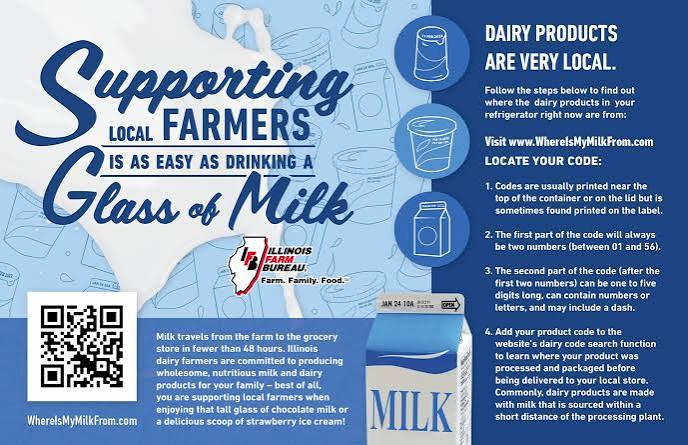
Most people don’t think twice about reaching into the refrigerator for a carton of milk. It’s a staple in countless kitchens, used for everything from morning cereal and coffee to baking, cooking, and making smoothies.
But milk doesn’t travel directly from a dairy cow to the grocery store. It follows a carefully managed journey through farmers, refrigerated trucks, processing facilities, quality testing, and distribution networks.
Understanding that journey offers a fascinating look at how one of our most familiar foods reaches the table.
Life on a Modern Dairy Farm
The journey begins on a dairy farm, where farmers care for cows and manage daily milk production.
Dairy cows typically start producing milk after giving birth, and many farms use automated or mechanically assisted milking systems to collect it.
Before milking, workers clean and prepare the cows’ udders. Equipment that comes into contact with milk must also be cleaned and maintained to prevent contamination.
Milk travels through sanitary equipment into refrigerated storage tanks.
Modern farms may use technology to monitor milk production, animal health, and equipment performance. These systems help farmers spot potential issues and keep operations running smoothly.
Although farms vary widely in size, milk quality and animal care matter throughout the industry.
Keeping Milk Cold From the Beginning
Fresh milk is highly perishable, making refrigeration one of the most important parts of its journey.
After collection, milk is rapidly cooled and held at controlled temperatures until transport.
Cooling slows the growth of many microorganisms, helping preserve milk quality before processing.
Milk is typically collected by insulated tanker trucks designed to transport food-grade liquids.
Before leaving the farm or during collection, samples may be taken to evaluate quality and check for conditions that could make the milk unsuitable for processing.
The tanker then transports the milk to a dairy processing facility, where it undergoes additional checks.
What Happens at the Dairy Processing Plant?
When raw milk arrives at a processing plant, it doesn’t immediately go into cartons.
First, the facility evaluates whether it meets established quality and safety requirements.
Testing may include screening for antibiotic residues, assessing composition, and performing other quality checks.
Once accepted, the milk moves into processing operations designed to prepare it for consumers.
Two common steps are standardization and homogenization.
Standardization adjusts the milk fat content to produce products such as whole milk, reduced-fat milk, and skim milk.
Homogenization breaks milk fat into smaller droplets and disperses them more evenly throughout the liquid. This helps prevent the cream from separating and rising to the top.
Although these processes affect milk’s appearance and consistency, another essential step addresses microbial safety.
Why Milk Is Pasteurized
Raw milk can contain harmful microorganisms, even from healthy animals on well-maintained farms.
Pasteurization uses controlled heat to reduce disease-causing microorganisms and improve milk safety.
For anyone wondering what is pasteurization, it is a process that heats food or beverages to a specified temperature for a specified amount of time to achieve the intended microbial reduction.
One common approach for milk is high-temperature short-time pasteurization, which heats milk to at least 161°F for 15 seconds.
The milk is then cooled for refrigerated storage.
Pasteurization doesn’t make ordinary refrigerated milk sterile or eliminate the need for proper handling. However, it is an important food safety measure that reduces the risk of illnesses associated with raw milk.
How Milk Gets Packaged
After processing, milk is transferred to filling equipment that fills cartons, plastic jugs, or other containers.
Packaging operations are carefully managed to reduce the possibility of contamination after pasteurization.
Workers fill, seal, label, and mark containers with date or lot information.
Different packaging materials have different advantages.
Plastic jugs are lightweight and convenient, while paperboard cartons can be designed to protect their contents from light. Packaging choices also influence shipping efficiency, storage space, and consumer preferences.
Finished milk is refrigerated until it is ready for distribution.
From the Dairy Plant to the Grocery Store
The next stage involves transporting packaged milk to stores, restaurants, schools, and other customers.
Refrigerated trucks help maintain the temperatures needed to protect product quality during transportation.
Milk may travel directly to retail locations or pass through distribution centers before reaching its final destination.
At the grocery store, employees place cartons and jugs into refrigerated display cases.
Stores monitor refrigeration equipment, rotate inventory, and remove products that no longer meet their quality or date requirements.
Because milk is perishable, careful handling matters throughout the entire supply chain.
What Happens After You Bring Milk Home?
The final part of the journey happens in your kitchen.
Consumers can help preserve milk quality by refrigerating it, returning it promptly after use, and avoiding unnecessary time at room temperature.
Store milk at 40°F or below, following the package’s storage instructions.
Also watch for signs of spoilage, such as unusual odors, changes in texture, or sour flavors.
Date labels can offer useful guidance, but they don’t replace proper handling or checking product quality.
A Familiar Food With a Remarkable Journey
A simple carton of milk represents the work of dairy farmers, truck drivers, food scientists, processing employees, and grocery store workers.
Each stage, from caring for cows to maintaining refrigerated transportation, helps get milk safely into consumers’ homes.
The next time you pour a glass, you’ll know there’s much more behind it than a quick trip to the dairy aisle.
