
A material that can reduce heat transfer, remain lightweight, and contribute to the strength of a composite component has obvious value across many industries. That combination explains why polyurethane foam has developed from a specialist material into a widely used component in construction, refrigeration, transportation, manufacturing, and other sectors.
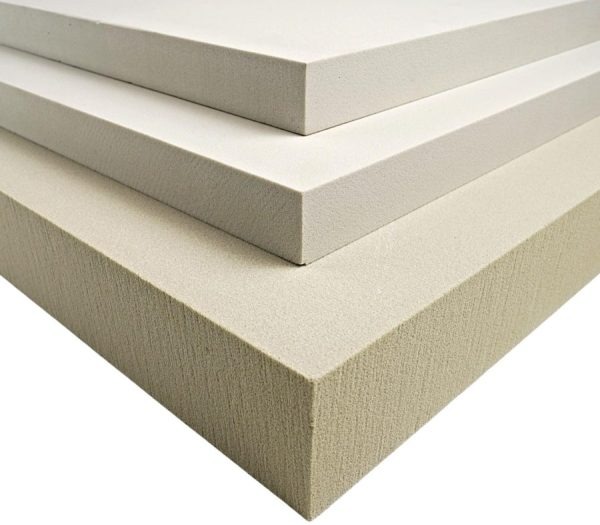
Today, Polyurethane foam insulation is not limited to traditional walls and roofs. It can be manufactured as rigid boards, sheets, cores, panels, and precision-cut components for different industrial requirements.
Its usefulness comes from the ability to engineer the foam for different densities and performance characteristics. Some grades are primarily designed to provide thermal insulation, while others offer greater mechanical strength for structural or composite applications.
What Makes Polyurethane Foam So Versatile?
Polyurethane is an adaptable material family with applications that extend far beyond insulation. Since its early commercial development during the twentieth century, polyurethane has appeared in products used in construction, automotive manufacturing, refrigeration, furniture, footwear, and numerous everyday applications.
Rigid grades are especially useful when a project requires a combination of low weight and performance.
Rigid polyurethane foam has a cellular structure that contributes to its thermal insulation properties. At the same time, suitable high-density grades can provide useful compression resistance and mechanical performance.
This dual-purpose nature is one reason foam can be found inside composite panels, insulated transport bodies, structural cores, and engineered components.
Refrigeration: Protecting Controlled Temperatures
Refrigeration systems cannot operate efficiently if excessive heat continually passes through their insulated boundaries.
Cold-storage rooms, refrigerated vehicles, and other temperature-controlled environments therefore require insulation capable of limiting heat transfer.
Rigid polyurethane foam is particularly suitable for these applications because of its low thermal conductivity. It can be incorporated into composite panels used to create insulated rooms and transport bodies.
The objective is straightforward: reduce unwanted heat movement so refrigeration equipment does not have to work unnecessarily hard to maintain the desired internal temperature.
In commercial environments, this can be important for both operational efficiency and maintaining stable conditions for temperature-sensitive goods.
Building Insulation and Energy Management
Buildings are another major application for rigid foam insulation.
Heat naturally moves between areas with different temperatures. During winter, heat can escape through poorly insulated walls and roofs, while summer conditions can allow unwanted heat to enter.
An effective insulation layer helps slow this movement.
Polyurethane insulation can provide a strong level of thermal resistance relative to its thickness. Reported thermal conductivity values for suitable polyurethane products can fall around 0.022–0.028 W/mK, depending on the product and specification.
This performance can make the material useful where designers want substantial insulation without consuming too much space.
Why Thickness Matters in Modern Construction
Insulation thickness can affect more than just the final dimensions of a wall or roof.
Increasing the thickness of an insulation system may influence internal floor area, roof details, junctions, window positioning, structural interfaces, and installation requirements.
High-performance insulation materials can therefore provide designers with greater flexibility.
A thinner high-performance layer may sometimes achieve a similar thermal objective to a thicker conventional insulation material. The appropriate thickness, however, should always be calculated according to the project’s thermal targets and applicable regulations.
Structural Applications of Rigid Foam
Not every application of rigid polyurethane foam is purely about temperature control.
Some grades are manufactured as structural or semi-structural core materials for composite components. Their strength-to-weight ratio makes them useful where manufacturers want to create a rigid component without adding unnecessary mass.
Applications can include:
- Rail components
- Boats and marine structures
- Construction products
- Buses and coaches
- Aircraft components
- Furniture
- Composite panels
- Specialist engineering structures
In a composite construction, the foam core may sit between stronger outer layers. The resulting component can combine low weight with rigidity and dimensional stability.
The exact structural suitability depends heavily on foam density, formulation, facing materials, geometry, and the loads involved.
Density Changes the Role of the Foam
One of the interesting characteristics of rigid foam products is that they are not all manufactured to the same density.
Insulation-focused products may be relatively lightweight, while structural grades can be produced at substantially higher densities.
Some rigid polyurethane products can be manufactured within broad density ranges suitable for different industrial requirements. Higher-density materials generally provide greater mechanical performance, although they may not be necessary when thermal insulation is the only objective.
This makes product selection important. The highest-density material is not automatically the correct choice. The specification should match the actual demands of the application.
Resistance to Moisture and Everyday Industrial Conditions
Moisture can create serious problems for insulation systems if water enters areas where it should not.
Certain rigid foam products provide good resistance to moisture and mildew, helping them perform in environments where humidity or occasional exposure is a concern.
However, insulation cannot replace proper building-envelope design. Waterproofing, vapour control, drainage, joints, sealants, and installation quality remain important.
For industrial products, chemical compatibility should also be considered. Some rigid polyurethane formulations have useful resistance to substances such as various solvents, oils, styrene, and polyester resins.
Technical compatibility should always be confirmed before exposing a particular foam to chemicals or manufacturing processes.
Phenolic Foam and Fire Considerations
Polyurethane is not the only rigid foam used in demanding applications. Phenolic foam is another specialist material that is particularly notable for its thermal and fire-performance characteristics.
Closed-cell phenolic foam can achieve very low thermal conductivity, with some products reaching values around 0.018 W/mK depending on the relevant specification and certification.
Its fire characteristics can also be significant. Appropriately manufactured and tested phenolic products can demonstrate low flame spread and low smoke production, and some engineered systems have been tested for substantial fire resistance.
These characteristics make phenolic foam relevant to applications where both thermal efficiency and fire performance are important.
However, fire safety should always be assessed using the certification and test results applicable to the complete construction system.
Environmental Considerations
Energy efficiency is increasingly connected with environmental performance.
A well-insulated building can require less energy for heating and cooling, potentially reducing operational energy consumption and associated carbon emissions.
High-performance insulation can contribute to this objective by reducing heat transfer through the building envelope.
Some phenolic foam products are available in CFC-free and HCFC-free forms, and their high thermal efficiency can allow substantial insulation performance with relatively limited material thickness.
The environmental impact of any insulation should nevertheless be considered across its wider life cycle, including manufacturing, transport, installation, durability, maintenance, and eventual disposal.
Benefits Across Multiple Industries
The broad use of polyurethane foam is largely explained by its ability to perform different jobs depending on formulation and design.
Key benefits include:
Thermal efficiency: Low thermal conductivity makes suitable foam grades effective for reducing heat transfer.
Lightweight construction: Foam can provide useful performance without adding excessive mass.
Mechanical performance: Higher-density grades can deliver greater compression resistance and structural support.
Manufacturing flexibility: Sheets, blocks, panels, and CNC-machined components can be produced for different requirements.
Moisture resistance: Appropriate products can offer useful resistance to moisture and mildew.
Material compatibility: Certain grades can work alongside resins, facings, and other materials used in composite manufacturing.
Space efficiency: Strong thermal performance can allow insulation systems to be designed around restricted spaces.
How to Select the Appropriate Foam
Choosing a foam should always begin with the application.
For a cold-storage project, thermal conductivity and temperature conditions may be the primary considerations. For a composite marine component, strength, density, water exposure, and compatibility with resin systems may become more important.
A construction project may require additional assessment of fire classification, thermal targets, building regulations, moisture control, and installation details.
Manufacturers can provide technical specifications covering density, thermal conductivity, compression strength, fire behaviour, moisture characteristics, and dimensional properties.
Reviewing these details before purchase helps ensure that the selected material is appropriate rather than simply choosing a product based on its general description.
Conclusion
The story of polyurethane foam is one of versatility. What began as a specialist polymer material has become useful across construction, refrigeration, transportation, furniture, marine manufacturing, and composite engineering.
Polyurethane foam insulation is particularly valuable when low thermal conductivity and efficient use of space are priorities. It can help control heat transfer in buildings, cold rooms, and refrigerated vehicles while remaining relatively lightweight.
At the same time, Rigid polyurethane foam can serve as a core material in composite structures where strength-to-weight performance matters. Different densit
