
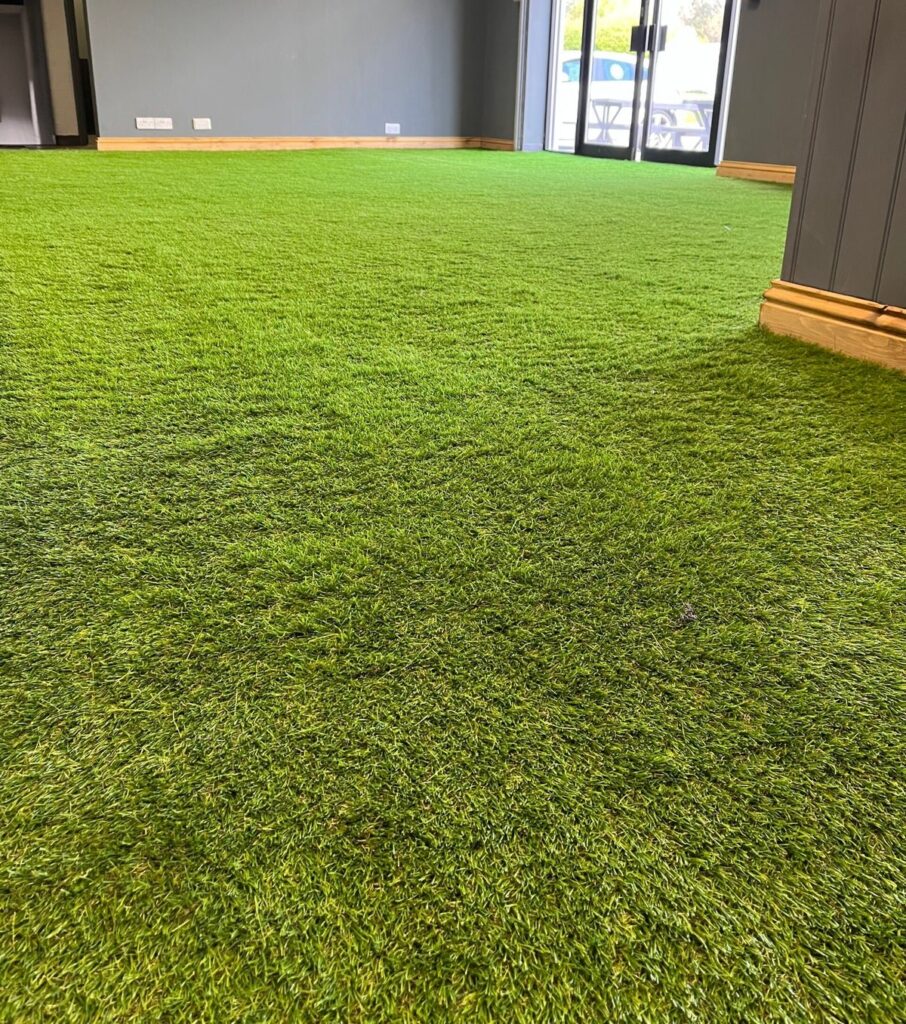
A green, tidy lawn is a lovely idea, but in a hot climate it usually means constant watering, mowing, and patching bare spots that never quite recover. That is why so many villa owners, balcony gardeners, and businesses have switched to an Artificial grass carpet surface that stays green all year with almost no effort. Modern artificial turf is a long way from the stiff, shiny plastic grass of the past: today's products use soft, multi tone blades, a realistic thatch layer, and backing designed to drain quickly. This article explains what it is, where it works best, how it is fitted, and what living with it is actually like.
What It Is and How It Is Made
Artificial grass carpet is supplied in rolls, like a carpet, and is made from synthetic yarns, usually polyethylene for softness, tufted or woven into a strong backing. The blades vary in height, commonly from about twenty millimetres for a neat, closely mown look to forty millimetres or more for a lush, meadow feel. Better products mix two or three shades of green with a beige or brown thatch at the base, which is what makes the surface read as real grass from a distance. The backing is perforated so rain and wash water pass through instead of pooling, and quality turf is UV stabilised so the colour holds up under strong sun rather than fading to blue or grey.
Because it comes in rolls, it can cover areas that loose lay tiles or planters cannot: a whole garden, a long side passage, a roof terrace, or a small balcony fitted in a single piece with no joins. It can also be cut around trees, stepping stones, and curved borders, which makes it far more flexible than many people expect.
Where It Works Best
Gardens are the obvious home for it, especially shaded corners where real grass refuses to grow and children's play areas that turn to mud or dust. Balconies and terraces benefit because the surface is light, needs no soil, and instantly turns bare concrete into a soft green space for morning coffee or a child's play mat. Commercial users choose it for restaurant terraces, school play areas, exhibition stands, and office breakout spaces where a natural look is wanted without a gardener's contract. It is also a practical fix around swimming pools, where it gives a non slip, barefoot friendly edge that does not shed grass clippings into the water.
Indoors, it appears in playrooms, themed retail displays, and sports themed cafés. Wherever you plan to use it, the questions are the same: how much foot traffic will it take, will furniture sit on it, and will pets use it? The answers decide the pile height and density you should buy.
How Fitting Works
On a hard surface such as concrete or tiles, fitting is straightforward: the area is cleaned, the turf is rolled out and left to settle flat, edges are trimmed, and the perimeter is fixed with adhesive or tape. On soil, the ground is first levelled and compacted with a layer of crushed stone and sharp sand, a weed membrane is laid, and only then is the grass rolled out, joined with tape and glue, and brushed up. A light infill of sand, spread and brushed in, helps the blades stand upright and keeps the surface stable. Most home installations of an Artificial grass carpet are completed within a day, and the area can be used as soon as the adhesive has cured.
Joins deserve attention because they are the only part of the job that can spoil the finish. Done well, a join is invisible: the blades are aligned in the same direction on both pieces, the backing edges meet without overlapping, and the seam is glued under even pressure. When comparing quotes, ask how joins are made and whether the direction of the pile will match across the whole area, since mismatched direction shows as light and dark bands in sunlight.
Choosing the Right Specification
Two numbers decide how a product performs: pile height and density. A taller pile looks luxurious but flattens faster where people walk, so busy gardens and play areas are usually happiest around thirty millimetres, while a quiet ornamental corner can carry a longer, softer pile. Density, meaning how many stitches of yarn are packed into each square metre, is the quiet marker of quality. A dense surface springs back, hides its backing, and resists wear far longer than a sparse one at the same height. When you handle samples, press your thumb hard into the pile: the faster and fuller it recovers, the better it will cope with real life.
Everyday Life and Simple Upkeep
Living with artificial grass is mostly about what you stop doing: no mowing, no watering schedule, no fertiliser, and no muddy footprints after rain. Upkeep is light but not zero. Brush the pile occasionally with a stiff broom to keep the blades upright in busy areas, rinse dust off with a hose during dry spells, and lift leaves and debris before they settle into the base. Spills wash out with water and mild detergent, and pet areas stay fresh with regular rinsing. Expect a good quality surface to look smart for eight to fifteen years depending on traffic, which is why it has become a permanent fixture of modern outdoor living rather than a temporary cover up.
