
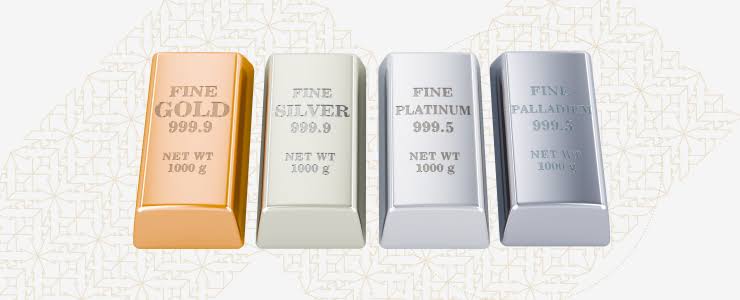
Gold gets most of the headlines, but the metals market is much broader. Silver, platinum and palladium each have their own supply stories and demand drivers, and industrial metals such as copper and aluminium are closely tied to construction, manufacturing and the energy transition. Traders who look past gold often find markets that react to different news and move to a different rhythm.
That variety also makes choosing a precious metal broker a little more involved than picking one for currencies. Not every provider offers the same metals, contract terms differ from one to the next, and liquidity in some metals is thinner than in gold. This article first explains what makes each metal distinct, then sets out how to judge whether a broker handles them well.
A Quick Tour of the Main Metals
Silver (XAGUSD). Silver is part precious metal, part industrial input. It is used in electronics, solar panels and medical applications, as well as in jewelry and investment products. That dual role means silver often follows gold in broad direction but with bigger percentage swings. Traders sometimes describe it as gold with more energy, which cuts both ways.
Platinum (XPTUSD). Platinum is used in catalytic converters, chemical processing and jewelry. Supply is concentrated in a small number of countries, so mining disruptions and production news can matter a great deal. Demand is linked to the automotive industry and, increasingly, to hydrogen technology discussions.
Palladium (XPDUSD). Palladium is also heavily used in catalytic converters, particularly for gasoline engines. Supply is concentrated too. Palladium has a history of sharp moves in both directions, and its market is smaller and less liquid than gold or silver.
Copper. Copper is a bellwether for global industrial activity. It is used in wiring, construction, electric vehicles and power grids. Prices often respond to economic data from major manufacturing economies and to news about mine supply.
Aluminium. Aluminium is lightweight and widely used in transport, packaging and construction. Its production is energy-intensive, so energy costs and policy decisions in producing countries can feed into the price.
Why the Differences Matter for Traders
Each of these metals responds to a different mix of factors. Gold reacts strongly to interest rates and the dollar. Silver reacts to those plus industrial demand. Platinum and palladium are tied closely to the car industry and to supply from a few producers. Copper and aluminium track the broader economic cycle. If you trade more than one metal, you are not simply trading the same idea several times. That can be useful, but it also means you need to follow more news.
Volatility also differs. Smaller markets such as palladium can move further in percentage terms on a given day than gold. Position sizes that feel comfortable on gold may be too large on palladium. Treat each metal on its own terms.
Evaluating a Broker: Seven Points to Check
With the basics of each metal in mind, the next step is to judge how well a broker supports them. These seven checks cover the ground most traders care about, roughly in the order they tend to come up when comparing providers.
1. Range of Metals Offered
Start with availability. Some brokers offer only gold and silver. Others include platinum, palladium and base metals as CFDs. Make a list of the metals you want to trade and confirm each one is offered, and in which form. Some brokers quote metals as spot CFDs, while others base them on futures contracts that roll over periodically.
2. Contract Specifications
Read the specification page for every metal you plan to trade. Note the contract size, minimum trade size, margin requirement, trading hours, swap rates and how the price is quoted. For futures-based CFDs, check the rollover schedule and how the broker adjusts positions at rollover, since this can affect your account.
3. Pricing and Spreads
Spreads on less liquid metals such as palladium and platinum are usually wider than on gold. Compare spreads across brokers at the times you actually trade, not just during peak hours. Also check whether spreads widen sharply around the daily break and on low-volume holidays.
4. Overnight Costs
Many metals traders hold positions for days or weeks. Swap rates can be a significant cost over that period. Compare long and short swap rates for each metal and estimate the cost of holding a typical position for a month.
5. Platform and Tools
Metals traders tend to use multiple timeframes and watch related markets. A platform that lets you chart several metals side by side, along with the dollar and major indices, is helpful. MetaTrader 4 and MetaTrader 5 are commonly used, and many brokers add web and mobile platforms. An economic calendar inside the platform is useful because industrial metals respond to manufacturing data from around the world.
6. Regulation and Client Protections
This is the most important check. Identify the legal entity that would hold your account and confirm it on the regulator’s public register. Read the client agreement for details on segregation of client funds, negative balance protection for retail clients, margin call and stop-out levels, and any compensation scheme. These protections differ by country.
7. Withdrawals and Support
Read the withdrawal policy before depositing. Ask support a specific question about a metal you plan to trade, such as how the broker handles a rollover on copper or what the trading hours are for platinum during a holiday. A clear answer is a good sign.
An Example of a Broad Metals Lineup
To illustrate what a wider offering looks like, Ultima Markets lists CFDs on gold (XAUUSD), silver (XAGUSD), platinum (XPTUSD), palladium (XPDUSD), copper and aluminium, alongside forex and other markets. These can be traded through MetaTrader 4, MetaTrader 5, WebTrader and the broker’s own app. For EU clients, its affiliated entity Ultima Markets Cyprus Ltd is regulated by the Cyprus Securities and Exchange Commission. More detail is available at ultimamarkets.com. As with any broker, check its regulation and terms in your own jurisdiction before opening an account.
Liquidity and Trading Hours
Liquidity shapes the experience of trading any metal. Gold and silver are deep, active markets for most of the trading day. Platinum and palladium are thinner, which can mean wider spreads and more abrupt moves, especially outside the busiest hours. Base metals have their own patterns, with activity often clustered around the sessions of the major industrial economies. Before trading a less liquid metal, watch its price behavior across a full week on a demo account. Note when spreads widen, when moves tend to happen and how the price reacts to data. This simple observation period helps you pick the hours that suit you and avoid the quiet stretches when pricing is less favorable.
Thinking About Correlation
Holding several metals at once can feel like diversification, but it often is not. Gold and silver frequently move in the same direction. Platinum and palladium share demand drivers. Copper and aluminium both respond to the economic cycle. If you open long positions in gold, silver and platinum at the same time, you may effectively be making one large bet. Before adding a position, ask whether it is genuinely different from what you already hold.
Some traders use the gold to silver ratio, which compares the price of an ounce of gold with an ounce of silver, as a reference point for relative value. It can be an interesting tool for thinking about the two metals, but it is not a reliable signal on its own, and ratio-based trades still carry the full risk of leveraged positions in both metals.
Risk Management Across Metals
- Adjust size by volatility. A smaller position in palladium may carry the same risk as a larger one in gold.
- Use stop-losses on every trade. Remember that in a fast market or a gap, a stop may be filled at a worse price.
- Cap total metals exposure. Because metals are often correlated, set a limit on combined risk, not just risk per trade.
- Know the calendar. Track interest rate decisions, inflation data and manufacturing reports from major economies.
- Keep records. Note which metals and setups work for you and which do not.
Leveraged metals trading is high risk. Most retail CFD traders lose money, and less liquid metals can produce sudden, large moves. Never trade with money you need for living costs or savings.
A Short Comparison Worksheet
When comparing brokers, a simple worksheet keeps things clear. For each broker, note:
- Regulated entity and register check result
- Metals offered and whether spot or futures-based
- Typical spread on each metal at your trading times
- Long and short swap rates
- Margin requirement for each metal
- Platforms available and whether charts and alerts meet your needs
- Withdrawal process and support response
Fill this in for three brokers and the right choice for your needs usually becomes obvious.
Closing Thoughts
Silver, platinum, palladium, copper and aluminium each offer something different from gold, and a broker that handles them well can open up a wider set of opportunities. They also bring wider spreads, different volatility and their own news flow. Choose a broker whose regulation you have verified, read every contract specification, size positions to each metal’s behavior and keep total exposure in check.
Risk warning: Metals CFDs are leveraged and can be highly volatile, especially in smaller markets such as palladium and platinum. You may lose money rapidly, and many retail traders do. This article is provided for general education and is not financial advice or a recommendation to trade any instrument.
