
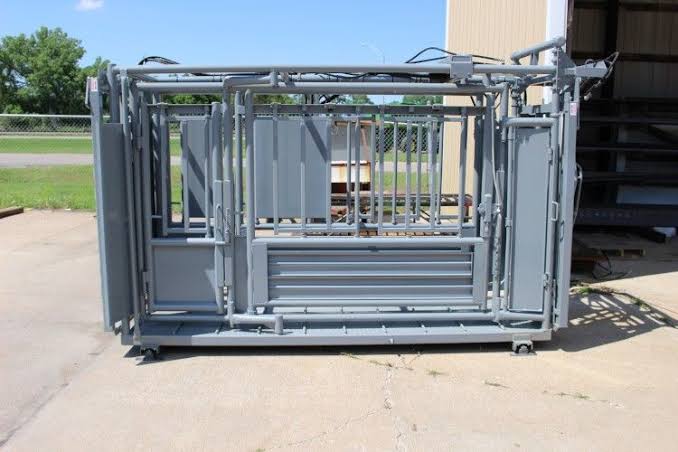
Spring is the critical season for cattle operations across the United States. Calving season peaks, spring vaccinations must be administered, and herd health assessments determine culling and breeding decisions. In the High Plains region, drought-stressed pastures further complicate management, requiring careful evaluation of forage resources and herd carrying capacity. A cattle squeeze chute with scale enables operators to process animals efficiently while collecting weight data essential for dosing medications and tracking performance. A cow-calf operation in Nebraska integrated a scale-equipped chute into their spring processing routine, reducing handling time by 40 percent while improving medication dosage accuracy.
Technical Overview: Integrated Restraint and Measurement System
The squeeze chute combines multiple functions into a single work station. The 10-foot alleyway accommodates mature cattle with ample room for palpation and treatment. A spring-loaded headgate operates quietly to reduce animal stress while securely restraining the neck. The side squeeze mechanism uses manual or hydraulic actuation to immobilize the body. The integrated scale platform reads weight up to 4500 pounds through a battery-powered LCD display, enabling operators to record individual animal weights during processing. Upper and lower swing openings provide targeted access to different body areas without releasing the animal.
The design reflects decades of refinement in animal handling science. The relationship between chute geometry and animal flow is well-documented in agricultural engineering literature. A curved alleyway approaching the chute leverages cattle’s natural circling behavior, reducing balking at the entrance. The headgate design incorporates a self-catch mechanism that engages when the animal’s neck passes through, minimizing the need for manual intervention during the catch sequence. These design elements collectively reduce processing time per animal from several minutes to under sixty seconds.
Efficiency and Productivity in Herd Health Programs
Time efficiency directly impacts herd health outcomes. Rapid processing reduces animal stress and allows more animals to be handled per work session. A single operator can manage headgate, tailgate, and side exit using lever controls. The side exit feature allows selective release of animals that require further attention or treatment. A veterinary practice in Texas reported processing 120 calves per hour through a similar chute setup, compared to 60 per hour with conventional headgate-only systems. The integrated scale eliminates separate weighing steps, reducing handling time and animal stress.
Beyond immediate processing speed, the efficiency gains extend to herd record-keeping. Weight data collected during spring processing establishes baseline body weights essential for monitoring growth rates and reproductive performance. These data inform breeding decisions, culling criteria, and feed allocation strategies throughout the production cycle. Without integrated weighing, many operators skip individual weights, accepting a significant gap in their herd performance data that accumulates over years.
Technical Fundamentals: Restraint Mechanisms and Load Measurement
- Headgate operation: The spring-loaded curtain-style headgate adjusts to different neck sizes, accommodating calves through mature cows. The mechanism closes quickly but quietly to minimize startle response. The self-catch design engages automatically as the animal moves forward, reducing the need for manual triggering.
- Anti-kick bar: A 7-position adjustable bar prevents animals from kicking backward during hindquarter procedures, protecting the operator while allowing full access. The range of positions accommodates different animal sizes and procedure requirements.
- Scale integration: The load cell-based system measures weight during restraint, with the LCD display positioned for operator visibility. Battery operation enables use in remote locations without external power. The 4500-pound capacity covers all cattle weights from calves to mature bulls.
- Access openings: Upper and lower swing panels provide access to torso, neck, legs, and feet for examination, treatment, and sample collection. The upper opening facilitates intravenous injections and ear tagging, while the lower opening enables foot examination and hoof trimming.
Performance Factors Affecting Safety and Effectiveness
- Animal size variation: The adjustable headgate and anti-kick bar must accommodate calves, yearlings, and mature cows without adjustment delays. The 10-foot alley length provides sufficient room for animals of all sizes, while the ribbed checker plate floor provides stable footing for both animals and operators.
- Ground conditions: The chute must be positioned on firm, level ground to prevent rocking and ensure accurate scale readings. The heavy-gauge galvanized steel construction maintains structural integrity even under the forces exerted by large animals.
- Operator technique: Low-stress handling principles reduce agitation, improving processing speed and animal welfare. Research indicates that calm animals enter the chute more willingly and require less squeeze force, reducing wear on mechanical components.
- Scale calibration: Regular zero-check and calibration maintain measurement accuracy for medication dosing and performance tracking. Ambient temperature changes can affect load cell readings, making periodic verification essential.
Safety Practices for Operators and Animals
Safety protocols are essential for preventing injury to both personnel and livestock. Operators must wear steel-toed boots, gloves, and eye protection. Loose clothing and jewelry are prohibited near the chute. The work area must be kept free of trip hazards and maintained on level ground. Never enter the chute enclosure while hydraulics are engaged. Maintain a communication system with processing team members to coordinate gate operations and animal movement. A risk assessment should be conducted before each processing session.
The pre-use inspection must verify gate latch function, scale display operation, and the condition of all moving parts before introducing cattle into the chute. The galvanized and powder-coated steel construction resists corrosion, but regular inspection of welds and pivot points remains necessary. The spring-loaded headgate mechanism requires periodic cleaning to maintain smooth operation, and the load cells must be protected from moisture and mechanical shock. Operators should also verify that all emergency release mechanisms function properly to address any situation requiring immediate animal release.
Equipment Types and Configurations
Several configurations serve different operational needs. Manual squeeze chutes with lever-actuated sides suit smaller operations where hydraulic systems are not justified. Hydraulic squeeze chutes powered by electric or gas power packs reduce operator physical effort and increase processing speed. Portable chutes with wheel kits allow relocation between pastures or facilities. The 10-foot length provides sufficient room for palpation and treatment behind the animal, a feature essential for veterinary procedures. Side exit options enable sorting without moving the animal through the full alleyway. The integrated scale configuration is suitable for operations requiring individual weight data for health and performance monitoring.
Advantages
- Single-lever operation enables one-person processing efficiency
- Integrated scale eliminates separate weighing step
- Upper and lower swing openings provide full animal access
- Galvanized steel construction resists corrosion
Limitations
- Requires level, firm ground for safe operation and accurate weighing
- Battery-operated scale requires periodic battery replacement
- Initial investment exceeds basic headgate-only systems
Case Example: Kansas Spring Processing Operation
A commercial cow-calf operation in western Kansas faced challenges with spring processing efficiency. The herd of 250 cows required vaccinations, deworming, and pregnancy checks. The previous system used a separate scale platform and standard chute, requiring animals to be moved through multiple work stations. The operation installed a 10-foot squeeze chute with an integrated scale and side exit. During spring processing, the crew processed 85 cows per hour, a 35 percent increase over the previous system. The scale data enabled accurate dosing of dewormers based on individual weights, improving treatment efficacy. The side exit allowed sorting of cows requiring follow-up treatments without rehandling. The powder-coated galvanized steel construction remained in good condition after processing 2,500 head through two spring seasons.
Conclusion and Future Industry Trends
The cattle squeeze chute market is advancing toward automated catch systems using sensor-driven detection of animal position and speed. Hydraulic operation reduces physical demands on operators while improving consistency. Future systems may integrate electronic identification readers and cloud-based data upload for real-time herd health monitoring. The combination of restraint, weighing, and access capabilities makes integrated scale chutes essential for modern cattle operations seeking to optimize spring processing efficiency and health outcomes. Ranchers should evaluate processing volume, facility layout, and available budget when selecting between manual and hydraulic configurations. The 10-foot length with integrated scale represents a versatile choice for operations that need both handling efficiency and individual weight data.
