
Ask ten people what a “good” Instagram account looks like and most will mention the follower count. Ask a brand manager or anyone who has run a poll, a survey, or a small marketing budget, and the answer changes: they want to know how many of those followers actually respond. That relationship between the audience you have and the reactions you get is engagement rate, and it is the single number that reveals whether an account is healthy, inflated, or quietly undervalued. This guide walks through the arithmetic, shows what a lopsided ratio looks like in practice, and lays out realistic ways to bring the two sides back into proportion.
The basic formula and why it exists
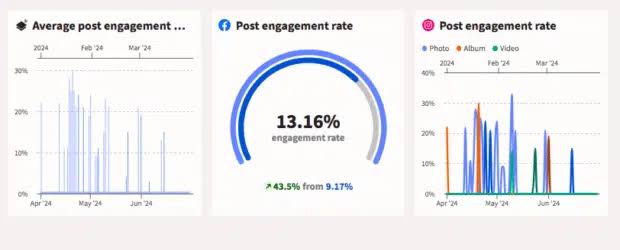
The most common version of engagement rate is simple: add up the likes and comments on a post, divide by the follower count at the time, and multiply by 100. A post that collects 60 likes and 5 comments on an account with 1,300 followers has an engagement rate of 5 percent. Averaging that figure across the last ten or twelve posts gives you the account-level number most people quote.
The formula exists because raw counts are misleading. A post with 400 likes sounds impressive until you learn the account has 90,000 followers, which puts engagement under half a percent. Meanwhile a home baker with 800 followers and 70 likes per post is outperforming that larger account by a wide margin in relative terms. Engagement rate normalizes the data so accounts of different sizes can be compared, which is exactly why sponsors, collaborators, and curious strangers lean on it.
There are variations. Some people divide by reach instead of followers, which measures how compelling a post was to the people who actually saw it. Others fold in saves and shares, which Instagram has increasingly treated as stronger signals than a double-tap. The follower-based version remains the default because it is the one anyone can estimate from a public profile without access to the account’s insights, and services such as FastSocial publish free profile tools that make pulling those public numbers quick. Whichever version you use, be consistent.
What the ratio looks like at different account sizes
Engagement rate shrinks as accounts grow, and that is normal rather than a sign of failure. Small accounts are often followed by friends, family, and genuinely interested niche fans, so a high percentage of them interact. Large accounts accumulate passive followers over years, people who followed once and never unfollowed but rarely scroll past the post. As a rough frame of reference, accounts under 5,000 followers often sit anywhere from 4 to 8 percent, mid-size accounts tend to drift toward 2 to 4 percent, and accounts above 100,000 frequently land between 1 and 2 percent.
Those ranges are not rules, and they vary enormously by niche. The useful takeaway is directional: if your account is far below the typical band for its size, something about the audience or the content is out of alignment, and that is what people mean by a lopsided ratio.
Two kinds of lopsided
A lopsided ratio can tip in either direction, and the fix depends on which one you have.
Too many followers, too few reactions. This is the classic problem. An account shows 12,000 followers and posts regularly get 40 likes, which is a 0.3 percent rate. Anyone who glances at the profile reads it immediately: either the followers are not real, or they are real but have lost interest. Neither story is flattering, and a brand evaluating the account for a collaboration will usually walk away. Causes include an old follower spike from a giveaway or viral post that attracted people who never cared about the regular content, a long posting gap that trained the algorithm to stop serving the account, or a change in topic that left the original audience behind.
Too few followers, surprisingly many reactions. This one is less obvious but equally common for new accounts. A fresh business page with 150 followers posts a product photo and it collects 90 likes because the founder shared it with friends and ran a small ad. The engagement rate reads as 60 percent, which looks more like a glitch than a success. Outsiders may assume the numbers are gamed, and the account also loses out on the compounding effect of a bigger base, since the algorithm has fewer people to test the post against. The fix here is to let the follower side catch up to the engagement side, which is a nicer problem to have.
Fixing the first case: shrinking the dead weight
When followers outnumber reactions by too much, there are two levers. The first is to make the follower count honest by removing the audience that will never engage. Instagram lets you remove followers manually from the followers list, and for accounts with a clear block of inactive or spam profiles it is worth spending an evening doing it. Dropping from 12,000 to 9,000 while keeping the same 40 likes lifts the rate from 0.3 to 0.44 percent, which is still low but moves in the right direction and tells the algorithm the remaining audience is a better match.
The second lever is to raise reactions among the followers who are still paying attention. Practical ways to do that include posting at the times your insights show the audience is online, asking a direct question in the first line of the caption, replying to every comment within the first hour, and leaning into carousels and Reels, which tend to earn more saves and shares than single images. Consistency matters more than brilliance here: three solid posts a week for two months will repair an engagement rate faster than one spectacular post followed by silence.
Fixing the second case: growing the base sensibly
When the engagement side is strong and the follower side is thin, the account needs reach. Organic routes include collaborating on posts with accounts of a similar size, showing up in relevant comment sections with something useful to say, using location tags if the business is local, and cross-posting to other channels where you already have an audience. These take weeks, but they bring in people who are likely to engage, which keeps the ratio balanced as the base grows.
Some account owners also choose to buy a modest batch of instagram likes or followers to smooth the launch period, particularly for a new business page where an empty-looking profile makes visitors hesitate. If you go that route, the math still applies. Purchased likes and followers are social proof, not a replacement for real engagement, and they will not improve how the algorithm distributes your posts to new people on their own. The sensible approach is to keep boosts small relative to your current numbers, choose a drip delivery option so counts rise gradually rather than overnight, spread likes across several recent posts instead of stacking them on one, keep posting on schedule so there is fresh content to engage with, and stay well within Instagram’s rules. A profile that jumps from 150 to 5,000 followers in a weekend while likes stay flat has just created the first kind of lopsided ratio, which defeats the purpose.
A simple monthly check
You do not need a spreadsheet with forty columns to monitor this. Once a month, write down four numbers:
- Current follower count
- Average likes across your last ten posts
- Average comments across the same ten posts
- The resulting engagement rate, using the same formula each time
Then look at the direction rather than the absolute value. Followers rising while the rate holds steady means growth is healthy. Followers rising while the rate falls sharply means the new audience is not interested, so pause whatever brought them in and figure out why. Followers flat while the rate climbs usually means your content is improving and reach will follow. Followers flat and rate falling is the warning sign that your existing audience is drifting away, and it calls for a content change before any growth effort.
The ratio is a story about trust
Engagement rate matters because people read it as a proxy for trust. A balanced ratio tells a visitor that real humans follow this account and care enough to react. A lopsided one makes them wonder what happened. The arithmetic is easy; the discipline is in checking it regularly, being honest about which side is out of proportion, and choosing fixes that keep the two numbers moving together. That balance is worth more than either number on its own.
