
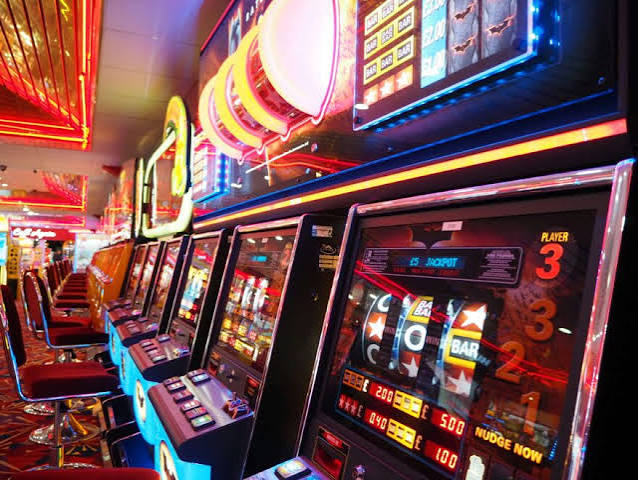
Slot games have changed dramatically from the simple mechanical machines I first became familiar with years ago. I have spent a lot of time looking at how casino games are structured, how slot features work, and why some machines feel completely different even though the basic action is still the same: place a wager, spin the reels, and see what appears.
What makes slots interesting to me is not only the possibility of a winning combination. It is the way developers combine mathematics, software, sound, visual design, themes, and bonus mechanics into a game that can be understood within seconds. A person does not need to memorize complicated rules before playing most slots, and that accessibility is one of the biggest reasons the format has remained popular.
At the same time, I think it is important to understand that slots are games of chance. Their simplicity can sometimes make them look more predictable than they really are. Knowing what happens behind the reels can help players approach them with more realistic expectations.
From Mechanical Reels to Digital Screens
Traditional slot machines were built around physical reels.
A classic machine might have had three reels containing a small collection of symbols. When someone pulled the lever, the reels rotated before stopping in different positions. If the correct symbols lined up across the payline, the machine paid a prize.
Modern machines often look very different.
Digital displays allow developers to create five-reel layouts, animated symbols, expanding grids, multiple bonus screens, and unusual reel structures. Online slots go even further because everything happens through software rather than a physical cabinet.
I have seen modern games that barely resemble the traditional three-reel format. Some use dozens of symbols on one screen. Others remove winning symbols and replace them with new ones, creating a chain of possible combinations from a single spin.
Even with all of these changes, the basic concept remains recognizable.
The Role of the Random Number Generator
The most important piece of technology inside a modern slot is usually the Random Number Generator.
An RNG continuously produces numerical results. These numbers correspond with positions and symbols in the game. When the spin is activated, the software uses a result to determine what appears on the screen.
This process matters because it helps explain why past results generally do not predict future ones.
I have spoken with players who believed that several losing spins meant a large win must be approaching. I have also heard the opposite idea: if someone has just won, the machine supposedly needs a long period before it can pay again.
That is not how independent random outcomes work.
A properly regulated RNG-based game is designed so that previous spins do not create a simple pattern that guarantees the next result.
Why Paytables Matter
Before playing an unfamiliar slot, I always think it is worth reading the paytable.
The paytable explains the game’s symbols and features. It may show which combinations produce payouts, how special symbols function, how bonus rounds are triggered, and whether certain features require particular conditions.
This information is especially useful with modern games because developers use many different systems.
One slot might reward matching symbols from left to right.
Another might pay for combinations appearing anywhere on adjacent reels.
A different game might use clusters, where several identical symbols touching one another create a result.
Without checking the rules, it can be difficult to understand why one spin pays while another apparently similar result does not.
Wild Symbols Add Flexibility
Wilds are one of the features I see most often.
A standard wild usually substitutes for certain regular symbols. If a winning combination is missing one symbol, the wild may fill that position.
Developers have expanded this idea considerably.
Expanding wilds can cover multiple positions.
Sticky wilds may stay on the screen for several spins.
Walking wilds move across the reels.
Multiplier wilds can increase a qualifying payout.
The exact behavior depends on the game, so I never assume that two wild symbols work in the same way just because they look similar.
Scatter Symbols and Bonus Rounds
Scatter symbols are another major part of modern slot design.
Unlike regular symbols, scatters often do not need to land along a specific payline. A game might require three or more scatters anywhere on the reels to unlock an additional feature.
Free spins are among the most common rewards.
I remember discussing one game with a player some time ago who was far more interested in reaching the free-spin round than in the normal base game. That reaction made sense to me because bonus rounds frequently introduce stronger animations, additional wilds, multipliers, or altered reels.
Developers use these features to create a feeling that the game has different stages rather than one repetitive spin sequence.
Understanding RTP
Return to Player, usually shortened to RTP, is an important term in slot gaming.
It represents a theoretical long-term percentage associated with the game.
If a machine has an advertised RTP around a certain percentage, that figure should not be interpreted as a promise that every player will recover that percentage of their money.
The calculation is based on very large amounts of gameplay.
A short session can look completely different.
One player might finish ahead after a handful of spins. Another could lose their entire planned budget during a similar period. Neither result automatically contradicts the stated RTP because the percentage is not a short-term guarantee.
I think this is one of the most commonly misunderstood concepts in slots.
Volatility Changes the Feel of a Game
Two slots can have similar themes and RTP figures but still feel completely different because of volatility.
Low-volatility slots generally aim to produce smaller wins more frequently.
High-volatility slots may have longer periods without significant results while offering the possibility of larger payouts.
Medium-volatility games sit somewhere between those patterns.
I have noticed that players often develop preferences based on this characteristic without necessarily knowing the technical term.
Someone who dislikes long stretches of losing spins may prefer a lower-volatility game.
Someone who is comfortable with fewer winning combinations might choose a higher-volatility option.
Neither structure removes risk.
Why Slot Themes Are So Diverse
Theme selection is a major part of the modern slot industry.
I have seen games inspired by ancient Egypt, pirates, mythology, animals, space travel, fantasy worlds, gemstones, cities, history, and many other subjects.
The theme usually does not change the basic fact that the game is based on chance, but it changes how the experience feels.
Developers use background music, animations, character designs, sound effects, and symbol artwork to make each game recognizable.
In my experience, some people choose a slot primarily because of its theme. They might enjoy an adventure-style game even if another machine has similar mechanics.
That shows how important presentation has become.
Progressive Jackpots
Progressive jackpots attract attention because the advertised top prize may increase over time.
Depending on the system, qualifying wagers from multiple players can contribute to the jackpot pool. The amount continues growing until the prize is won and then typically resets.
Some jackpots are connected to one game.
Others may link several machines or online titles together.
Large progressive prizes can look impressive, but I think they should always be viewed in context. The possibility of a very large payout normally comes with a very low probability of receiving it.
A jackpot is a potential outcome, not a dependable financial plan.
Online Slots Have Expanded the Format
Online casinos have allowed slot developers to experiment much more aggressively.
Without the limitations of a physical cabinet, developers can create large reel grids, detailed animations, interactive bonus features, and unusual game mechanics.
Mobile devices have also influenced design.
Many newer slots are built so that they can work on smaller screens. Buttons are larger, interfaces are simplified, and animations are optimized for mobile displays.
Where online gambling is legal, players may have access to hundreds or even thousands of slot titles from different software providers.
That variety is very different from the experience of walking through a traditional casino floor.
Common Slot Misconceptions
I regularly hear theories about how to predict slots.
Some players believe certain machines become hot or cold.
Others think stopping the reels manually at a precise moment changes the final result.
Another common belief is that switching wager sizes in a particular sequence can trigger a bonus.
With legitimate random games, there is no reliable method that guarantees a winning spin.
That is why I am cautious whenever I see someone advertising a “secret slot strategy” that supposedly removes the risk.
If such a system truly guaranteed profits, the underlying economics of casino gaming would not work.
Chasing Losses Can Make Things Worse
One of the biggest mistakes I see is continuing to gamble specifically to recover money already lost.
Imagine someone begins with a modest entertainment budget. After losing most of it, they decide to increase the wager because they want to return to their starting balance.
If the larger wagers also lose, the financial damage can grow very quickly.
Previous losses do not guarantee that a recovery is coming.
I think it is much healthier to decide on a spending limit before playing and treat that amount as the maximum cost of the entertainment.
Time Limits Are Useful Too
Financial limits receive most of the attention, but I also think time limits are useful.
Slots can move quickly.
Online games in particular can make it possible to complete many spins within a short period. Because each spin lasts only a few seconds, someone can lose track of how long they have been playing.
Regular breaks help interrupt that pace.
I prefer the idea of approaching gambling like any other paid leisure activity. There should be a clear beginning, a clear budget, and a point where the activity ends.
Keeping Slots in Perspective
The biggest lesson I have taken from studying slot machines is that understanding the game should increase awareness rather than create false confidence.
Learning about paylines is useful.
Understanding RTP is useful.
Knowing the difference between volatility levels can be useful.
Recognizing wilds, scatters, jackpots, and bonus mechanics makes a game easier to follow.
But none of these things turns a random game into a guaranteed source of profit.
Slot machines have become much more slot visually sophisticated, but they remain games of chance at their core.
For me, the most sensible approach is to treat them as entertainment. Anyone who chooses to play should use money they can comfortably afford to lose, follow local laws, avoid chasing losses, and stop when the experience is no longer enjoyable.
Modern slots can be fascinating examples of game design and technology. Their reels, sounds, graphics, mathematical models, and bonus mechanics continue to evolve. Understanding those elements makes the format easier to appreciate while also providing an important reminder: every spin involves uncertainty, and no outcome is guaranteed.
