
Introduction
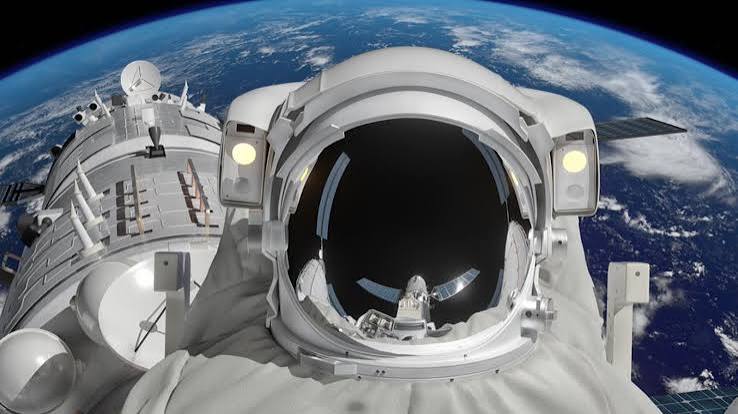
Space technology represents one of the most advanced and inspiring fields of human innovation. It involves the development of spacecraft, satellites, rockets, and exploration systems that allow humans to study and utilize outer space.
From communication satellites to Mars rovers, space technology has transformed how we understand the universe and improved life on Earth in many ways. It plays a key role in navigation, weather forecasting, global communication, and scientific discovery.
What is Space Technology?
Space technology refers to the tools, systems, and methods used to explore outer space and to support space missions.
It includes both manned and unmanned missions, satellite systems, and deep-space exploration technologies.
How Space Technology Works
Space missions rely on advanced engineering and physics principles.
- A rocket launches a spacecraft into space.
- Satellites or probes are placed into orbit or deep space trajectories.
- Onboard systems collect data using sensors and instruments.
- Data is transmitted back to Earth via communication systems.
- Scientists analyze the information for research and applications.
This process enables continuous space exploration.
Key Components of Space Technology
Rockets
Vehicles used to launch spacecraft into space.
Satellites
Objects placed in orbit for communication, navigation, and observation.
Space Probes
Unmanned spacecraft used for deep space exploration.
Space Stations
Orbiting laboratories for scientific research.
Ground Control Systems
Earth-based stations that manage space missions.
These components work together to enable space exploration.
Types of Space Missions
Communication Satellites
Used for TV, internet, and global communication.
Earth Observation Missions
Monitor weather, climate, and natural disasters.
Exploration Missions
Study planets, moons, and deep space.
Human Spaceflight
Manned missions to space stations and beyond.
Navigation Systems
GPS and global positioning technologies.
Each mission type serves a unique purpose.
Applications of Space Technology
Communication
Enables global internet and broadcasting.
Weather Forecasting
Improves prediction of storms and climate changes.
Navigation
Provides accurate GPS systems.
Disaster Management
Helps monitor earthquakes and floods.
Scientific Research
Expands knowledge of the universe.
Defense Systems
Supports national security and surveillance.
Space technology is deeply integrated into daily life.
Benefits of Space Technology
Global Connectivity
Improves worldwide communication systems.
Scientific Advancement
Expands understanding of space and Earth.
Economic Growth
Creates jobs and industries.
Disaster Prediction
Helps save lives through early warnings.
Technological Innovation
Drives advancements in multiple fields.
These benefits impact both space and Earth.
Challenges of Space Technology
High Costs
Space missions require massive investments.
Technical Complexity
Requires advanced engineering and precision.
Space Debris
Increasing waste in Earth’s orbit.
Safety Risks
Human spaceflight involves danger.
Limited Accessibility
Only a few countries can afford space programs.
These challenges limit rapid expansion.
Role of Artificial Intelligence in Space Technology
AI plays a major role in space exploration by analyzing data, controlling spacecraft, and assisting in autonomous Tải sunwin. It helps reduce human workload and improves mission success rates.
Space Exploration and the Universe
Space technology allows scientists to study planets, stars, galaxies, and cosmic sunwin, helping answer fundamental questions about the universe and our place in it.
Future of Space Technology
The future of space technology is highly advanced and ambitious, with goals of deeper exploration and human settlement beyond Earth.
Future developments may include:
Mars Colonization
Human settlement on Mars.
Space Tourism
Commercial travel to space.
Advanced Space Telescopes
Deeper exploration of the universe.
Interplanetary Missions
Exploration of distant planets.
Space Mining
Extraction of resources from asteroids.
Space technology will continue to expand human reach.
Conclusion
Space technology is one of the most powerful fields of human innovation, enabling exploration beyond Earth and improving life on our planet. It has transformed communication, navigation, and scientific research.
Although challenges such as cost, safety, and complexity exist, continuous advancements are making space exploration more accessible and efficient.
In the future, space technology will unlock new possibilities for humanity, including interplanetary travel and deeper understanding of the universe.
As technology evolves, space exploration will remain a symbol of human curiosity and progress.
