
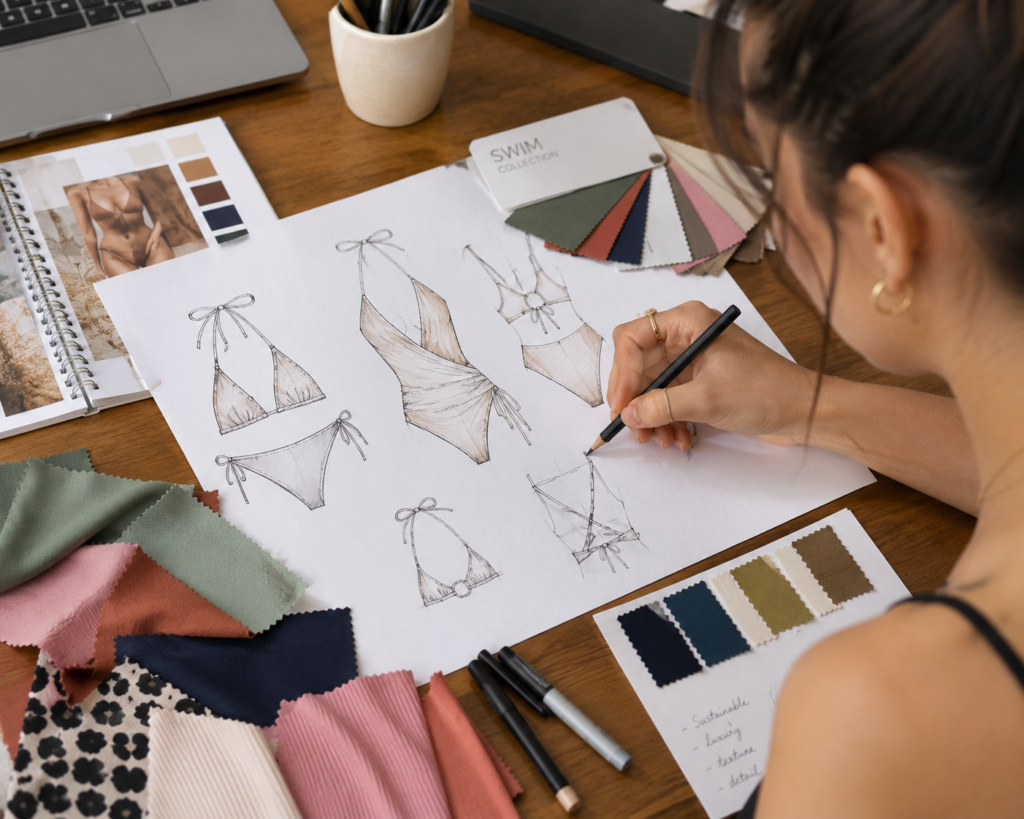
There’s a persistent myth in fashion that you need your own factory to build a serious brand. It shows up in how people talk about “real” manufacturers versus brands that just slap a logo on someone else’s product. But walk through any swimwear trade show and you’ll find that a huge chunk of the labels people consider legitimate, established brands don’t own a single sewing machine.
They’ve built their entire business on partnerships instead of ownership, and it’s working better than the old model ever did. This is essentially what private label swimwear makes possible, and it’s quietly reshaping who gets to start a fashion brand in the first place.
The Old Barrier to Entry
For decades, starting a swimwear line meant either learning garment production yourself or raising enough capital to build a small production operation. That barrier kept a lot of good ideas out of the market. Someone with a strong design sense and a clear vision for a brand, but no background in manufacturing, simply couldn’t compete with companies that had factories and decades of production know-how behind them. The gap between having a great concept and actually holding a finished product in your hands was enormous, and most people never crossed it.
What Changed
Manufacturers have gotten a lot more comfortable working with smaller, independent brands rather than only taking on massive corporate orders. Factories that used to require enormous minimums and long-term exclusivity contracts are now set up to handle smaller runs, faster turnarounds, and more flexible design requests.
This shift didn’t happen because factories suddenly became generous, it happened because there’s real demand from a growing pool of founders who have strong branding instincts but no interest in running a production floor.
Design Without the Overhead
The appeal here isn’t just convenience, it’s focus. A founder who partners with an established manufacturer gets to spend their time on the things that actually differentiate a brand: fit, fabric choice, colorways, marketing, and community building.
Meanwhile, the technical side, pattern grading, cutting, seam construction, quality checks, gets handled by people who’ve been doing exactly that for years. It’s a division of labor that plays to everyone’s strengths instead of forcing a designer to also become a factory manager overnight.
It’s Not Just for Beginners
There’s a misconception that this approach is only for people just starting out, a stepping stone until a brand is big enough to build its own facility. In reality, plenty of well-established labels stick with this model permanently, even after they’ve grown well past their first few collections.
Owning a factory comes with fixed costs, equipment maintenance, staffing headaches, and reduced flexibility to change designs or scale production up and down with demand. Working with an outside manufacturer keeps a brand nimble, which matters a lot in an industry where trends and seasonal demand shift fast.
Quality Concerns Are Usually Overblown
A common hesitation is the assumption that outsourcing production means giving up quality control. That was a more fair concern years ago, but it doesn’t hold up as well today. Established manufacturers who specialize in swimwear have deep experience with the specific challenges of the category, chlorine and saltwater resistance, four-way stretch fabric, lining that doesn’t turn sheer when wet, and they’ve usually refined those processes across hundreds of client relationships.
A brand that builds a clear relationship with a manufacturer, does proper sampling, and stays involved in quality checkpoints can maintain just as much control over the final product as they would running their own line.
Lower Risk, Faster Iteration
One of the more underrated advantages is how much easier it becomes to test new designs. A brand with its own factory has sunk costs tied to specific equipment and processes, which makes experimenting with new styles riskier.
A brand working with an outside manufacturer can test a new cut or fabric in a small batch, see how it performs, and adjust quickly without the same financial exposure. This kind of flexibility lets smaller brands react to trends and customer feedback in a way that heavier, more vertically integrated companies often can’t.
What to Look for in a Partner
None of this works well without picking the right manufacturing partner. Founders should look closely at a factory’s experience specifically with swimwear, not just general apparel, since the technical requirements are different enough that experience doesn’t always transfer.
Communication during the sample stage, clarity around minimum order quantities, and willingness to do smaller test batches are all good signs of a manufacturer that’s set up to work well with independent brands rather than only large corporate accounts.
Final Thoughts
Building a swimwear brand without owning a factory isn’t a compromise or a shortcut, it’s simply a different, often smarter way to structure a fashion business. It lets founders focus on the parts of the brand only they can shape, while leaning on manufacturing partners who’ve already solved the hard technical problems. As more experienced factories open their doors to smaller, independent labels, the idea that you need to own production to be taken seriously is becoming less true every year.
