
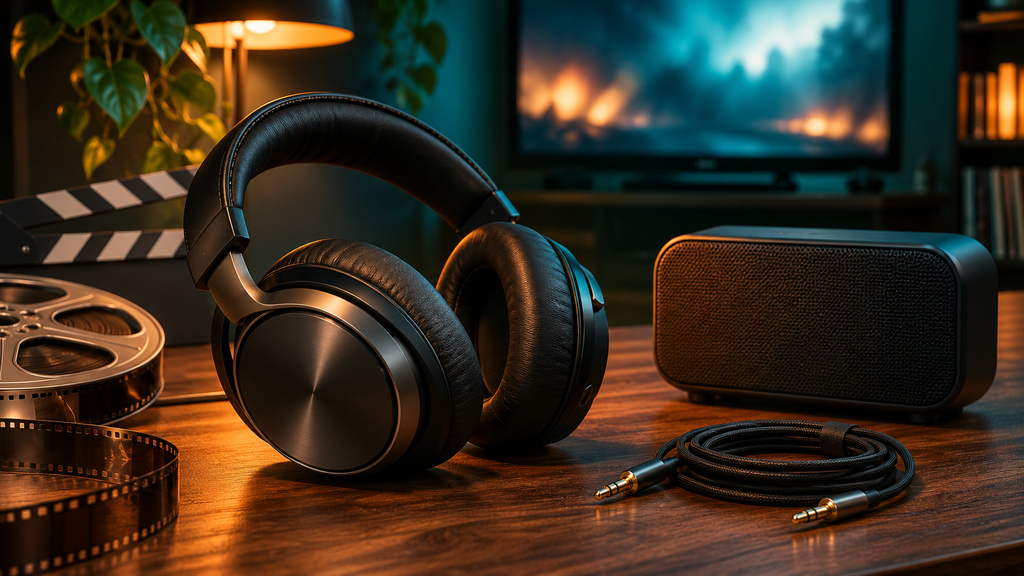
A film scene can remain vivid because of something you heard: a distant train, a repeated melody, a voice suddenly close or an abrupt change in background noise. Images often receive the first attention in a discussion, but listening offers another route into the story. Start with the sound that stayed with you and describe when it appeared. You do not need specialist equipment or production vocabulary to begin.
Think of sound design and music as parts of the complete viewing experience rather than separate decorations. Ask what a sound makes you notice, what information it offers and how it relates to the picture. Keep those questions open. The same kind of sound can feel reassuring, distracting or unsettling in different circumstances, so its role depends on the scene around it.
Distinguish the layers you can hear
During a scene, try noticing the voices, environmental sounds, particular effects and music as separate layers. There may be several at once, or one may become prominent while the others recede. An ordinary conversation could include traffic outside, footsteps nearby and a barely noticeable musical passage. Describing those layers gives you a practical way to explain why the scene feels busy, intimate or exposed.
Do not turn the exercise into a demand to identify every noise. Follow one layer for a short stretch, then consider how it interacts with the others. Does the background become quieter when a character begins speaking? Does music continue across a pause in the dialogue? A specific relationship between sounds usually tells you more than a complete list of everything you managed to hear.
Ask where a sound seems to come from
Some sounds appear to belong to a visible source: a person speaking, a door closing or a radio playing in the room. Others come from beyond the frame or have no apparent source within the scene. Notice how your understanding changes when a source is revealed. A noise that initially seemed mysterious may become ordinary once the picture shows what produced it.
Keep apparent story sources separate from assumptions about recording. Hearing footsteps that match someone walking does not tell you how the finished sound was made. You can discuss the result without guessing the production process. The interesting viewing question is what the sound suggests about the world of the film and how much the audience knows compared with the characters who hear it.
Listen for the space beyond the picture
Sound can make a setting seem larger than the part of it currently visible. Voices from another room, weather outside or activity down a corridor invite you to imagine surrounding space. Ask whether these sounds establish ordinary background life or draw attention toward something the image has not yet shown. Their usefulness may lie in the expectation they create rather than in an immediate explanation.
Compare scenes that show similar places but sound different. A room with distant conversation and movement may feel unlike the same room when those sounds are absent. Describe what changed before deciding what it means. The contrast may help you understand a shift in activity, viewpoint or atmosphere, but the film’s context is needed before you can confidently choose among those possibilities.
Follow the timing of musical entrances and exits
When music enters, notice the moment rather than immediately deciding what emotion it represents. Does it begin before an action, arrive with a change in the image or appear after a character has reacted? The timing can affect how you connect events. Music that anticipates a moment creates a different relationship from music that seems to reflect on something already completed.
Pay equal attention to when it stops. A conversation may continue after the music disappears, making ordinary room sounds newly noticeable. Alternatively, music may carry across a change of location and connect scenes that look separate. Explain the sequence in your own words. You can notice these relationships without identifying instruments precisely or knowing how to describe a melody in technical terms.
Compare repetition with variation
A recurring sound or musical idea invites comparison with its earlier appearances. Note what is happening each time you hear it. The repetition may connect a place, a relationship or a situation, but avoid deciding on a single meaning too quickly. A later appearance can complicate your first interpretation rather than simply confirm it.
Listen for changes in how the familiar material appears. It may seem slower, more distant, fuller or less prominent, or it may accompany a different kind of action. Describe the difference you can hear instead of guessing the creative team’s intention. Then ask how the new context alters your response. This approach lets repetition become part of an evolving story rather than a code with one permanent translation.
Treat quiet as something specific
A scene described as silent may still contain breathing, clothing movement, distant traffic or room noise. Listen for what remains when the more obvious sounds disappear. Relative quiet can make a small detail easier to notice, but it does not have to mean tension. The characters’ behaviour and the surrounding scenes help determine how the change feels.
Keep your playback at a comfortable level and avoid raising it sharply just to search for faint details. The aim is attentive viewing, not an equipment test. If a sound is unclear in your setup, acknowledge that limit in your notes. A careful description can say that you noticed a reduction in background activity without pretending to identify something you could not actually make out.
Connect listening notes to the story
Choose one scene and record a short sequence: what you heard first, what changed and what the change coincided with on screen. Then add your interpretation separately. This keeps observation and explanation from becoming tangled. Another viewer may agree about the sound while drawing a different conclusion about its effect, giving you something useful to discuss rather than a disagreement over vague impressions.
If a movie reference encountered while searching 123movieshd prompts a closer look, start with one listening question instead of a full technical checklist. You might follow how the film establishes a room or how music changes around a reunion. Use an authorized viewing source for any revisit. The focused question helps keep the exercise connected to the film rather than to the act of collecting terminology.
Return to the complete experience
After examining a few details, watch the scene again as a whole if you wish. Notice how dialogue, images, sound and music work together in your experience. You may discover that a moment you initially attributed to the score also depends on a pause in speech or a change in the picture. Describing that interaction is more useful than insisting that one element explains everything.
Listening closely should add another dimension to enjoyment. Begin with the sounds you notice, consider their timing and compare them with the surrounding story. Leave room for uncertainty when the evidence is incomplete. Over time, a distant noise or a brief musical entrance can become an invitation to understand a scene more fully, while the film remains a story to experience rather than a puzzle to solve. Listen closely to one familiar scene on your next viewing, then explore OxPoll and bring the same curiosity to another subject.
