
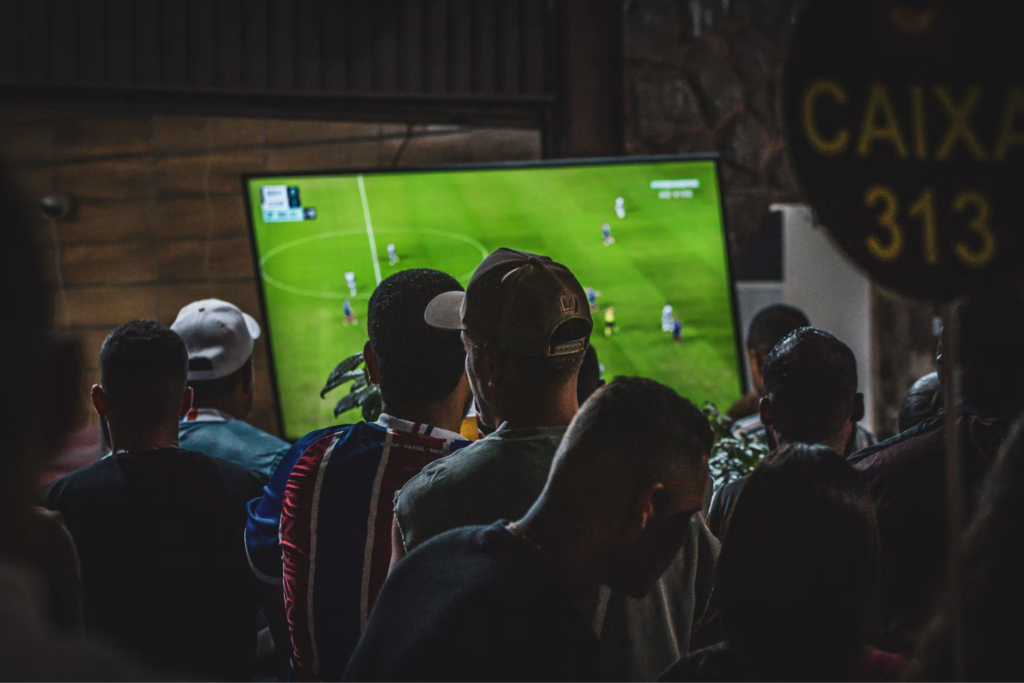
Walk into a sports bar in Cologne or Hamburg on a Saturday afternoon and you’ll notice something beyond the beer taps and match commentary. Above the counter, a digital board quietly updates: win streaks, prediction accuracy, table rankings for the regulars who’ve turned casual betting chatter into a running scoreboard. Nobody built these boards because a marketing department demanded them. Bar owners installed them because customers kept asking for the numbers.
That demand says something about how people process outcomes over time. A single result – a win, a loss – barely registers emotionally compared to a sequence. Five correct predictions in a row feels like competence. Three losses feels like a pattern worth breaking. This is the same psychological terrain that habit-tracking apps and weight-management platforms operate in, where visible streaks around eating windows or workout consistency shape behavior far more than any single day’s outcome. Apps like slimking lean on that exact mechanism, turning daily check-ins into a visible chain that users feel reluctant to break, mirroring almost exactly what happens on a bar’s win-rate board.
Where the streak board idea came from
The concept isn’t native to German bar culture – it migrated. Fantasy football platforms in the UK and US popularized public leaderboards years before European sports bars adopted anything similar. What changed locally was the rise of second-screen betting apps that let patrons stake small amounts on in-game moments: next corner, next card, next substitution. Owners realized a board showing real-time accuracy turned passive drinking into a sociable contest. Early boards were literally whiteboards with marker tallies. A regular would chalk up a win, a friend would groan, and the ritual built its own gravity. Digital versions replaced the marker with a screen fed by a simple spreadsheet, but the appeal never changed – visible proof of who’s currently “hot.”
The mechanics behind a typical board
Most setups follow a similar structure regardless of the bar’s size or region.
- A running tally of correct predictions per patron, usually reset weekly
- A “current streak” column that highlights anyone above three consecutive wins
- A color-coded indicator – green for hot, red for cold – updated after each match segment
- An all-time leaderboard that rarely resets, giving long-term regulars a reason to keep returning
None of this requires sophisticated software. Several bars use nothing more than a shared Google Sheet displayed through a mirrored tablet, updated manually by staff between rounds.
The psychology of visible streaks
Behavioral researchers have a name for what’s happening here: the hot-hand narrative. Even in domains where outcomes are statistically closer to independent events than genuine momentum, people perceive streaks as meaningful and adjust their confidence – and often their bets – accordingly. A board that publicly displays these streaks doesn’t just record behavior, it amplifies it.
There’s a social layer too. Losing in front of the room hurts more than losing quietly at home, so regulars start picking safer bets to dodge the ribbing. A winning streak works the opposite way, tempting people to double down instead of walking away with their reputation intact. Bar staff notice the shift almost immediately once a name climbs toward the top.
| Streak Length | Typical Patron Behavior | Board Display |
| 1-2 wins | Neutral, business as usual | No highlight |
| 3-5 wins | Increased confidence, larger stakes | Green highlight |
| 6+ wins | Peer attention, social pressure to continue | Gold border, top position |
| 2+ losses | Caution, smaller or safer picks | No highlight |
| 4+ losses | Self-deprecating jokes, brief withdrawal | Red highlight |
Why bars keep investing in the hardware
A digital board costs more than a chalk one, yet adoption has accelerated across German cities over the past several years. Owners cite two practical reasons beyond entertainment value.
Retention through friendly rivalry
A patron with a six-match win streak has a reason to return next Saturday to defend it. That’s a retention mechanic no drink special can replicate. Bar managers in Munich have reported measurable upticks in weekend attendance after installing streak boards, crediting regulars who now treat the board as a personal record worth protecting.
Data that informs the room, not just the individual
Boards also aggregate collective accuracy, which shapes conversation. If the whole bar is running cold on a particular league’s predictions, that becomes a talking point in itself – a shared experience rather than an individual one. It transforms the screen from a personal scoreboard into something closer to a communal mood indicator.
Where the trend goes from here
Some venues are trying out integrations with apps that sync a patron’s phone-based history of predictions directly to the bar’s screen, removing the manual entry step altogether. Others tread carefully, concerned that automating the process removes the informal, slightly chaotic charm that made chalk-and-whiteboard tracking appealing in the first place. No matter which way you look at it , the truth is the same : people like visible continuity . Whether it ‘s a string of right predictions in football , or a string of consistency in your daily habits . The board simply forces that continuity, and for a certain kind of regular, that’s the point.
