
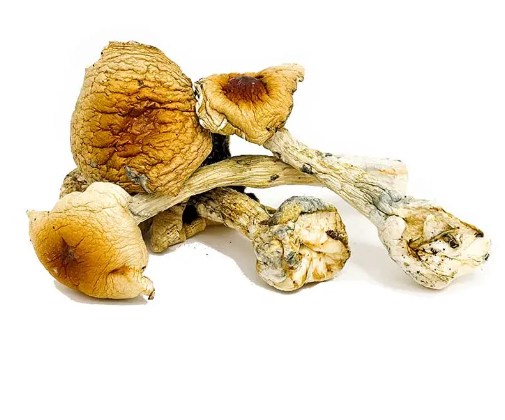
Mushroom names can seem straightforward at first. A product or article may use a familiar common name, a scientific name, or a variety name to identify a particular mushroom. However, understanding what these names actually mean can be more complicated than expected.
The mushroom world includes scientific classifications, common names, historical names, regional terminology, cultivation names, and informal labels. In some cases, the same mushroom may be known by several names, while similar names may be used for products that are not identical.
This can create confusion for anyone researching mushrooms online, particularly when product descriptions and popular discussions use terminology differently. Developing a basic understanding of mushroom naming can therefore make it easier to interpret information, compare products, and recognise when two terms are referring to the same or different things.
Common Names and Scientific Names
One of the first distinctions to understand is the difference between common names and scientific names.
Common names are the names people use in everyday conversation. They can be easier to remember, but they are not always standardised. A mushroom may have different common names in different regions or communities.
Scientific names are used within biological classification. They are designed to identify organisms more precisely and provide a consistent system for researchers and specialists.
For example, Psilocybe cubensis is the scientific name associated with a species commonly discussed in relation to certain psychedelic mushrooms. The scientific name provides a more precise reference than a broad phrase such as “magic mushroom.”
However, scientific terminology does not necessarily make every online product description clearer. Some commercial pages use common names, strain names, or informal terminology alongside scientific classifications.
Understanding the distinction between these naming systems is therefore a useful starting point.
Why One Mushroom Can Have Several Names
A single mushroom can acquire different names over time for many reasons.
Some names develop from appearance, location, cultural history, or traditional usage. Others become popular through cultivation communities or online discussions.
In the case of cultivated mushroom varieties, names can sometimes refer to particular lines or phenotypes rather than representing separate biological species. This is one reason mushroom terminology can become confusing for newcomers.
A name that sounds like a completely different mushroom may actually be associated with a variety within a broader species. Conversely, similar names do not necessarily mean that two products are identical.
Online information can add another layer of complexity. Websites, forums, retailers, and social media communities may use slightly different terminology for the same subject.
This does not necessarily mean that one source is intentionally misleading. It can simply reflect the informal nature of some mushroom naming conventions.
The safest approach is to consider the name alongside the scientific classification and the description provided by a reliable source.
Understanding Mushroom Names When Exploring Online Categories
For readers who browse the mushroom category, understanding the terminology used on product pages can make the experience much easier. Shrooms Direct presents mushroom-related products through organised categories and individual product descriptions, allowing visitors to see different names and formats in one online environment.
A category may contain products identified using species names, variety names, or descriptive product terminology. These names can provide useful information, but they should not be interpreted in isolation.
For example, two products may have different variety names while belonging to the same broader species. On the other hand, two products that appear similar from their names may have different formulations or product formats.
When reading an online mushroom category, several details can help provide context:
- Scientific classification: Where available, this can identify the broader biological group.
- Common name: This may be the term most familiar to general readers.
- Variety or strain name: This may describe a cultivated line or commonly recognised variation.
- Product format: The same naming terminology can appear on dried, capsule, chocolate, or other products.
- Product description: Additional information can clarify what the name is intended to represent.
Looking at all of these details together is more reliable than assuming that a name tells the entire story.
Strain Names, Varieties and Species Are Not Always the Same Thing
The words “species,” “strain,” and “variety” are often used interchangeably in casual mushroom conversations, but they can refer to different levels of classification.
A species is a formal biological category. It describes a group of organisms that share defined characteristics within a scientific classification system.
A variety or cultivated line may refer to a more specific form within a species. In mushroom-growing communities, particular names may become associated with distinct physical characteristics or cultivation histories.
The term “strain” is particularly complicated because it is used differently across scientific, commercial, and informal settings. A cultivation community may use the term to describe a particular genetic line, while another source may use it more loosely.
This is why readers should avoid assuming that every named mushroom represents a separate species.
The distinction is not merely academic. It can help prevent confusion when comparing educational resources, product descriptions, and discussions from different sources.
A good source should make it reasonably clear whether a name refers to a species, a cultivated variety, or an informal label.
Why Mushroom Names Change Over Time
Scientific classification is not completely static. As researchers gain access to new evidence, organisms can sometimes be reclassified.
Advances in genetic research have become particularly important in modern taxonomy. Genetic analysis can reveal relationships between organisms that are difficult to establish through appearance alone.
This means that older books, websites, or articles may occasionally use terminology that differs from more recent scientific sources.
Common names can also change independently of scientific classification. A name may become popular within a particular community and later be replaced or supplemented by another term.
Commercial naming adds another layer. Products may be given distinctive names for identification or marketing purposes, even when those names do not correspond to formal biological classifications.
For readers, the key lesson is that names provide useful clues, but context matters. When accurate identification is important, scientific sources and established taxonomic references are more dependable than relying exclusively on informal terminology.
Building Better Mushroom Vocabulary
A strong understanding of mushroom terminology does not require memorising hundreds of names. Instead, readers can focus on learning a few fundamental distinctions.
Several habits can make mushroom-related research easier:
- Learn the difference between common and scientific names.
- Check whether a name refers to a species or a cultivated variety.
- Do not assume that different names automatically represent different species.
- Compare information across reliable sources when terminology appears inconsistent.
- Read the complete product description rather than relying only on the product title.
- Treat informal community terminology as context rather than automatically as scientific classification.
- Remember that taxonomy can change as new evidence becomes available.
This vocabulary is useful not only for psychedelic mushroom discussions but also for edible, medicinal, cultivated, and wild mushroom topics.
It also helps readers become more critical when evaluating online information. A confident-sounding mushroom name does not necessarily make the accompanying information accurate.
For anyone interested in mushrooms, understanding how names work is ultimately about improving communication. When readers know what different terms represent, it becomes easier to ask precise questions, compare information, and recognise misleading or overly broad descriptions.
Conclusion
Mushroom names can be surprisingly complicated because they come from several different naming systems. Common names, scientific classifications, variety names, cultivation terminology, and commercial labels can all appear within the same category.
Understanding these differences helps readers avoid treating every name as though it represents a separate species. It also makes online product descriptions and educational resources easier to interpret.
The most useful approach is to look beyond the name itself. Scientific classification, product format, ingredient information, and reliable descriptions all provide additional context.
As interest in mushrooms continues to grow, basic terminology will become increasingly valuable. A reader who understands how mushroom names are formed and used can navigate the subject with greater clarity and distinguish established biological information from informal or commercial terminology.
